Table of Contents
- When Does Homeowners Insurance Cover a Roof Leak in North Carolina?
- When Insurance Will Not Pay for a Roof Leak
- Storm Damage vs Wear and Tear: What a Roofer Sees on the Roof
- How NC Wind, Hail and Hurricane Deductibles Affect Your Roof Claim
- Why Roof Age Changes What Your Insurance Pays
- Does Insurance Cover Water Damage Inside Your Home From a Roof Leak?
- What to Do in the First 24 Hours After You Find a Roof Leak
- Should You File a Claim or Pay for the Repair Yourself?
- How to File a Roof Leak Claim in North Carolina
- Get a Roof Inspection Before You Call Your Insurance Company
- Frequently Asked Questions About Roof Leaks and Insurance in NC
- Call Oak Tree Roofing About Your Roof Leak in Fayetteville
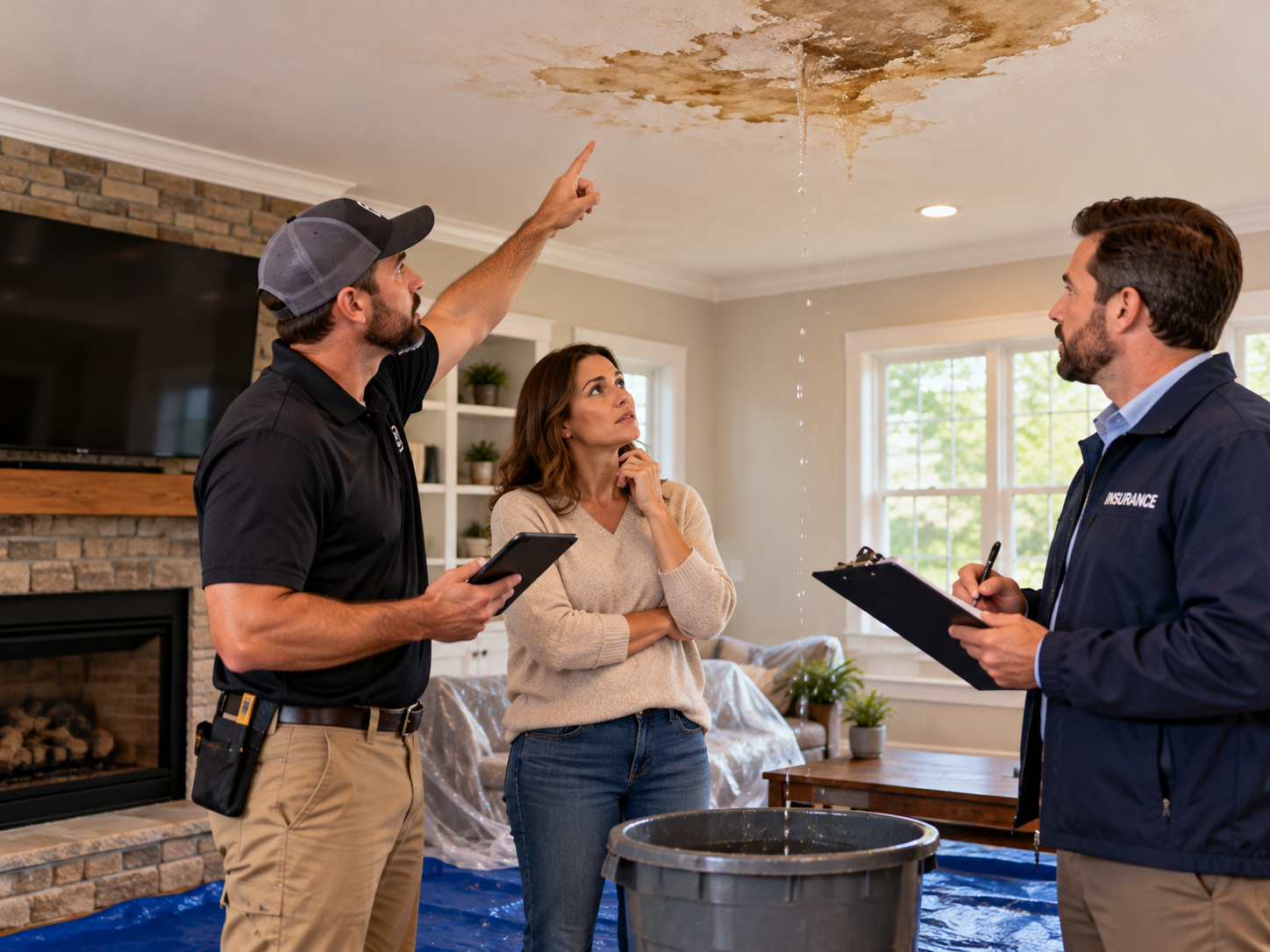
It starts with a drip. Then a brown ring spreads across the ceiling after last night’s storm.
You grab a bucket. You stare at the stain. One question takes over your whole morning: will insurance pay for this?
Here is the honest answer. It depends on one thing, and that one thing is the cause. A storm-driven leak is often covered. A leak from an aging roof usually is not.
So, does homeowners insurance cover a roof leak in NC? Sometimes yes, sometimes no, and the line between them is easier to see than most people think.
In this guide, we explain what insurers pay for and what they deny. We also show how NC deductibles can change the math. You will get a simple first-day checklist too.
Want a roofer’s eyes on the problem right now? Schedule a roof inspection or call (910) 994-0403.
When Does Homeowners Insurance Cover a Roof Leak in North Carolina?
Homeowners insurance in North Carolina typically covers a roof leak when a sudden, accidental event causes it. Wind, hail, a fallen tree and fire are common examples. The policy usually pays for the roof damage and the interior water damage that follows. Leaks from age or poor upkeep are normally excluded.
The “Sudden and Accidental” Rule in an HO-3 Policy
Most NC homes carry an HO-3 policy. It protects the structure against listed risks, called covered perils.
The key phrase is “sudden and accidental.” A branch punches through your shingles overnight. That is sudden. Shingles slowly wearing thin over fifteen years is not.
Covered Perils That Commonly Cause Roof Leaks in NC
| Cause of the leak | Usually covered? | What to know |
| Wind lifting or tearing shingles | Often yes | A percentage deductible may apply |
| Hail impact | Often yes | Look for bruised or cracked shingles |
| Fallen tree or limb | Often yes | Photograph the tree before removal |
| Fire or lightning | Often yes | Smoke and water damage may follow |
| Hurricane or named storm wind | Often yes | Named storm deductible usually applies |
| Worn-out shingles | Usually no | Treated as a maintenance issue |
| Flooding or surface water | No | Needs separate flood insurance |
Why the Cause Matters More Than the Leak Itself
Two homes can have the same ceiling stain. One gets paid. The other gets denied.
The adjuster is not judging the stain. The adjuster is judging what created the opening in your roof.
When Insurance Will Not Pay for a Roof Leak
Insurance does not pay for roof leaks caused by wear and tear, neglected maintenance, faulty installation, pests or flooding. Policies treat these as ongoing home upkeep, not sudden losses. The insurer may still cover resulting interior damage in some cases, but the roof repair itself usually falls on you.
Wear and Tear and Old Shingles
Shingles lose granules, curl and crack as they age. Insurers expect this. It is the slow decline of a roof doing its job.
Lack of Maintenance and Neglected Repairs
A small leak ignored for months becomes a big claim. Clogged gutters can also push water under the roof edge. Our rain gutter services help keep that water moving away from your roofline.
Poor Installation and Workmanship Issues
Bad flashing or poor nailing can cause leaks within a few years. Insurers often call this a contractor problem. The fix may come from a workmanship warranty, not your policy.
Pests, Flooding and Other Common Exclusions
Animal damage, termite damage and rising water are common exclusions. Rain that runs across the ground into your home is a flood claim, not a roof claim.
Storm Damage vs Wear and Tear: What a Roofer Sees on the Roof
A roofer can often tell storm damage from age-related failure by the pattern. Storm damage tends to be localized and fresh, such as creased, missing or bruised shingles. Age-related failure spreads across the whole roof, with widespread granule loss, curling and brittle, cracked materials.
Signs of Storm Damage
- Creased shingles in a line, where wind folded them back
- Missing shingles on one slope, usually the side facing the storm
- Round dents or bruises from hail
- Fresh scrapes or punctures from debris
- Damage on soft metals like vents and flashing
Signs of Age-Related Failure
- Bare patches where granules have washed away
- Curled or cupped shingle edges across the whole roof
- Cracked sealant around vents and chimneys
- Moss or algae growth in damp areas
- Brittle shingles that snap when lifted
Storm vs Wear Comparison
| What we see | Likely cause | Insurance outlook |
| A few creased shingles on one slope | Wind | Often covered |
| Round bruises with cracked mats | Hail | Often covered |
| Granules piling in gutters, all slopes | Age | Usually not covered |
| Curling edges everywhere | Age | Usually not covered |
Why Documentation From a Roof Inspection Helps
Photos matter. A dated inspection report with close-ups gives you something concrete to show your insurer.
Here is a real example. One homeowner noticed a brown spot on the ceiling after a storm. We inspected that same afternoon and repaired the leak two days later. Before and after photos gave them clear proof of what happened.
How NC Wind, Hail and Hurricane Deductibles Affect Your Roof Claim
Many NC policies use a percentage deductible for wind, hail or named storms. Instead of a flat $1,000, you pay a percentage of your dwelling coverage, often 1% to 5%. On a $300,000 home, a 2% deductible means $6,000 out of pocket before insurance pays.
Standard Deductible vs Percentage Deductible
Your standard deductible covers most everyday claims. A separate wind or hail deductible applies to storm losses. It can be far higher.
Deductible Math on a Typical NC Home
| Dwelling coverage | 1% deductible | 2% deductible | 5% deductible |
| $200,000 | $2,000 | $4,000 | $10,000 |
| $300,000 | $3,000 | $6,000 | $15,000 |
| $400,000 | $4,000 | $8,000 | $20,000 |
Named Storm and Hurricane Deductibles
A named storm deductible can be higher than your wind and hail deductible. Hurricane season brings this into focus for homes across eastern and central NC.
Where to Find Your Deductible on the Declarations Page
Open your policy and find the declarations page. It lists every deductible in one place. Check it before a storm, not after.
Why Roof Age Changes What Your Insurance Pays
Roof age affects how much an insurer pays, even when the leak is covered. Newer roofs often get replacement cost coverage, which pays to rebuild at today’s prices. Older roofs may be paid at actual cash value, meaning depreciation is subtracted. Some insurers apply roof payment schedules that shrink payouts with age.
Replacement Cost vs Actual Cash Value
Think of it this way. Replacement cost pays for a new roof. Actual cash value pays for the roof you had, minus its age.
Roof Payment Schedules and Depreciation
Some policies reduce payments by a set percentage each year of roof age. Ask your agent whether your policy has one.
How Roof Age Affects Premiums and Renewal in NC
Older roofs can mean higher premiums or tougher renewals. A new roof often earns better terms. If replacement is on your horizon, roof replacement in Fayetteville done right can reset that clock.
Material choice matters too. Systems like GAF TimberSteel roofing are built to stand up to heavy NC weather. Ask your insurer whether upgrades affect your rates.
Does Insurance Cover Water Damage Inside Your Home From a Roof Leak?
Yes, homeowners insurance typically covers interior water damage when a covered peril caused the roof leak. That can include ceilings, drywall, insulation and belongings. If the leak came from age or neglect, the insurer may deny both the roof repair and the resulting interior damage.
Ceilings, Insulation and Drywall
Wet insulation and drywall must dry quickly. Slow drying invites mold and rot. Move fast, even before the claim is approved.
Personal Belongings and Loss of Use
Furniture, electronics and clothing may be covered under personal property. Loss of use coverage can help with temporary housing when the damage is severe.
Mold After a Roof Leak
Mold coverage is usually limited. It tends to apply only when mold grows from a covered loss. Quick drying and prompt repair protect your claim and your health.
What to Do in the First 24 Hours After You Find a Roof Leak
In the first 24 hours, protect your home and document everything. Move belongings away from the leak, set out buckets and take photos before cleanup. Tarp the roof or call a roofer for emergency protection. Then contact your insurance company to report the loss.
Protect Your Home and Stop Further Damage
Policies expect you to prevent further harm. Move furniture. Put a bucket under the drip. Cover the damaged area if it is safe.
Never climb a wet or damaged roof. A tarp is not worth a fall.
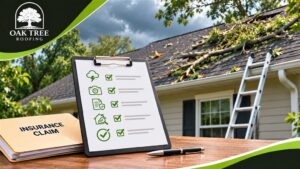
Document Everything
- Photograph the ceiling stain from several angles
- Video the active drip
- Note the date, time and weather
- Save receipts for every temporary fix
Why Temporary Repairs Matter for Your Claim
Reasonable emergency repairs, like tarping, are often reimbursed on a covered claim. Keep every receipt. Confirm the details with your insurer.
Should You File a Claim or Pay for the Repair Yourself?
Compare your repair cost against your deductible before filing. Small leak repairs often cost $360 to $1,550, while common deductibles run $500 to $2,000. If repairs cost less than your deductible, paying out of pocket may make more sense. For major storm damage, filing is usually worth it.
Comparing Repair Cost Against Your Deductible
Get a clear repair price first. Then check your deductible. The gap between them shows what insurance would really pay.
How Claims Can Affect Your Premium and Renewal
Claims can influence renewal pricing. Policies and insurers differ. Ask your agent before filing a small claim.
When Filing Makes Sense and When It Does Not
- File when: a storm caused widespread damage, repairs exceed your deductible, or interior damage is spreading
- Think twice when: the repair is minor, the cause looks age-related, or the cost sits below your deductible
How to File a Roof Leak Claim in North Carolina
To file a roof leak claim in NC, report the loss to your insurer promptly, share your photos and wait for an adjuster visit. Keep receipts, request a written claim decision and save every email. Policies set reporting deadlines, so do not wait.
Contact Your Insurer and Read Your Policy
Call or use your insurer’s claim portal. Get a claim number. Read your policy for deadlines and requirements.
Meeting the Adjuster
Have your photos and inspection notes ready. Walk the adjuster through the damage. Point out every affected area.
If Your Claim Is Denied or Underpaid
Ask for the reason in writing. A roofer’s inspection report can support a second look. You can also contact the NC Department of Insurance for consumer help.
Remember, we document the damage. Your insurer makes the final coverage decision.
Get a Roof Inspection Before You Call Your Insurance Company
A roof inspection before you file gives you facts. You learn whether the damage looks storm-related or age-related. You also get photos and notes to share with your insurer. That clarity helps you decide whether to file at all.
What Oak Tree Roofing Checks During a Roof Inspection
- Shingle condition, creases, missing pieces and impact marks
- Flashing around vents, chimneys and valleys
- Underlayment and decking signs of moisture
- Attic signs of past or active leaks
- Gutters and drainage along the roofline
Our team brings 15+ years of combined experience to every roof. If you need storm damage roof repair in Fayetteville, we start with a no-pressure inspection and clear photos.
Serving Fayetteville, Raeford and Surrounding NC Communities
We work across 13+ counties. That includes Fayetteville, Raeford, Hope Mills, Laurinburg and Southern Pines. Call (910) 994-0403 to book.
Frequently Asked Questions About Roof Leaks and Insurance in NC
Does homeowners insurance cover a roof leak from old age?
Usually no. Insurers treat age-related leaks as maintenance, not sudden damage. The policy may still help with some resulting interior damage if a covered event contributed. Read your policy or ask your agent.
Will my insurance cover a full roof replacement for a leak?
Sometimes. If a covered storm damaged large areas, replacement may be approved. Isolated damage often leads to repair only. Roof age and policy terms also decide the outcome.
Does wind-driven rain count as a covered roof leak?
Often yes. When wind creates an opening, such as torn shingles or a broken window, rain entering through it is typically covered. Rain seeping through a worn roof usually is not.
Will my rates go up if I file a roof leak claim in NC?
It can happen. Rates depend on your insurer, claim history and roof condition. Ask your agent how a claim may affect renewal before you file.
How long do I have to report a roof leak?
Policies set their own deadlines, and many expect prompt notice. Report the leak as soon as you find it. Delays can weaken a claim.
Should I call my insurance company or a roofer first?
Do both quickly. Protect the home, document the damage, then report the loss. An inspection report from a roofer gives your claim strong support.
Does insurance pay for a temporary tarp?
Often, on a covered loss. Insurers usually reimburse reasonable emergency repairs that prevent further damage. Keep receipts and photos, then confirm with your insurer.
Can mold from a roof leak be covered?
Sometimes, with limits. Coverage generally applies when mold results from a covered loss. Dry the area fast and repair the roof promptly.
If you also wonder how to judge a contractor, learn what a GAF certified roofing contractor offers through certification tiers and warranties.
Call Oak Tree Roofing About Your Roof Leak in Fayetteville
Roof leaks feel urgent because they are. The good news is you now know the rules. Cause decides coverage. Deductibles decide your cost. Documentation decides how smoothly it goes.
Coverage depends on your individual policy and your insurer’s decision. For specifics, check your declarations page or talk with your agent.
When you are ready for answers about the roof itself, we are here. Learn more about Oak Tree Roofing, explore our roof repair and replacement in North Carolina options or schedule a roof inspection today.
Call (910) 994-0403