Table of Contents
- Why the Inspection After Installation Matters as Much as the Install
- The Different Inspections That Can Happen After a GAF Roof Is Installed
- What a Professional Checks on the Roof Surface
- Flashing, Valleys, and Penetrations: Where Leaks Start
- Ventilation and the Attic Check
- Gutters, Cleanup, and the Magnetic Nail Sweep
- GAF Warranty Registration: Deadlines You Shouldn’t Miss
- Your Homeowner Walkthrough Checklist
- What Happens If Issues Are Found
- Red Flags of a Rushed Roof Installation
- Want a Second Look at Your New Roof?
- Frequently Asked Questions About GAF Post-Installation Roof Inspections
- Get a Roof Done Right With Oak Tree Roofing
The Johnsons’ new roof in Raeford looked perfect from the street. Clean lines. Fresh color. The crew packed up in two days.
Three months later, a summer storm rolled through. The next morning, a brown stain appeared on the hallway ceiling, right below the chimney.
The shingles were fine. The problem was the flashing. One small detail was missed, and nobody checked it before the crew left.
That’s why the GAF post-installation roof inspection matters so much. A new roof isn’t finished when the last shingle goes on. It’s finished when every part has been checked, documented, and registered under the right warranty.
This guide walks you through exactly what happens after a GAF roof is installed. You’ll learn which inspections may take place, what professionals check, how warranty registration works, and what you can safely check yourself.
Just had a new roof installed and want peace of mind? Call Oak Tree Roofing at (910) 994-0403.
Why the Inspection After Installation Matters as Much as the Install
A post-installation inspection catches mistakes before they become leaks. Many installation problems, like poor flashing or incorrect nailing, are invisible from the ground. In North Carolina, where storms test every weak spot, a careful final inspection protects your home, your warranty, and your investment from day one.
Most Installation Mistakes Are Invisible From the Ground
From the driveway, every new roof looks good. But misplaced nails, loose flashing, and unsealed edges hide in places homeowners can’t see.
These small mistakes often show up months later as stains, drips, or lifted shingles.
NC Storms Test Every Weak Spot
Summer thunderstorms and tropical systems bring wind-driven rain across Fayetteville, Raeford, and Hope Mills. If something was missed, the first big storm will find it.
If storms have already damaged your roof, our storm damage roof repair in Fayetteville team can help.
Your Warranty Depends on Getting It Right
Enhanced GAF warranties depend on proper installation, qualifying products, and timely registration. A thorough inspection helps confirm everything is in place before paperwork is filed.
The Different Inspections That Can Happen After a GAF Roof Is Installed
After a GAF roof is installed, several inspections may take place: the contractor’s final quality inspection, a GAF warranty review for certain enhanced warranties, a local building permit inspection where required, a FORTIFIED evaluation if applicable, and your own homeowner walkthrough. Each one checks something different.
| Inspection | Who Does It | What It Confirms | When It Happens |
| Contractor final inspection | Your roofing contractor | Workmanship, details, cleanup | Right after installation |
| GAF warranty review | GAF, for certain enhanced warranties | Eligibility and qualifying installation | During warranty registration |
| Permit final inspection | Local building inspector | Code compliance | After work, where required |
| FORTIFIED evaluation | Certified FORTIFIED Evaluator | IBHS FORTIFIED requirements | Only for FORTIFIED roofs |
| Homeowner walkthrough | You | Visible quality and cleanup | Before final payment |
The Contractor’s Final Quality Inspection
This is the most important inspection. A project manager or crew lead should check every area of the roof before the crew leaves. It covers shingles, flashing, vents, gutters, and cleanup.
GAF Warranty Review for Enhanced Warranties
For some enhanced warranties, GAF reviews the project before issuing coverage, and GAF reserves the right to withhold a warranty. Ask your contractor whether your specific warranty includes a GAF inspection or review.
Local Building Permit Final Inspection
Many North Carolina towns and counties require a permit for roof replacement. When they do, a local building inspector may check the work for code compliance. Your contractor usually handles the permit and scheduling.
FORTIFIED Evaluator Inspection (When Applicable)
If your roof is being built to the IBHS FORTIFIED standard, an independent Certified FORTIFIED Evaluator must verify the work before a designation is issued.
Your Own Homeowner Walkthrough
You know your home best. A short walkthrough helps you spot obvious issues, confirm cleanup, and ask questions before signing off.
What a Professional Checks on the Roof Surface
On the roof surface, a professional checks shingle alignment, exposure, nailing placement, sealing, and the installation of starter strips, drip edge, and ridge caps. These details affect wind resistance, water shedding, and warranty eligibility. Even a few misplaced nails can weaken a roof during strong NC storms.
Shingle Alignment and Exposure
Shingle rows should run straight and even. Exposure, the visible part of each shingle, should be consistent across the roof.
Uneven rows can signal rushed work and may affect how water flows off the roof.
Nailing Placement and Sealing
Nails must be placed in the correct nailing zone and in the right quantity per the manufacturer’s instructions. GAF Timberline HDZ shingles use a wide StrikeZone to help with accuracy.
Inspectors also look for shingles that aren’t lying flat or sealing properly.
Starter Strips, Drip Edge, and Ridge Caps
Starter strips at the eaves and rakes help lock down the first row against wind. Drip edge protects the roof edge from water. Ridge caps should be straight, secure, and properly fastened.
Planning a full replacement? Learn more about our roof replacement in Fayetteville.
Flashing, Valleys, and Penetrations: Where Leaks Start
Most roof leaks start at flashing, valleys, and penetrations like chimneys, pipes, and vents. A post-installation inspection checks that flashing is properly layered and sealed, valleys are clean and correctly installed, and every pipe boot and vent is secure. These spots need the most careful attention.
Chimney and Wall Flashing
Where the roof meets a chimney or wall, step flashing and counter flashing should be layered correctly. Gaps or missing pieces let water slip behind the shingles.
This is exactly what caused the Johnsons’ ceiling stain.
Valleys and Roof Intersections
Valleys carry a large amount of water during heavy rain. They need proper underlayment and careful shingle cuts. Inspectors check for clean lines and no exposed gaps.
Pipe Boots, Vents, and Skylights
Every pipe, vent, and skylight creates an opening in the roof. Inspectors confirm boots are new, properly sealed, and correctly layered with surrounding shingles.
Ventilation and the Attic Check
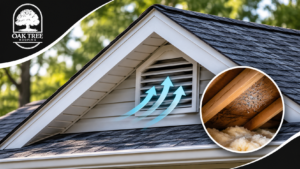
A post-installation inspection should confirm that roof ventilation is balanced, with enough intake air at the soffits and exhaust at the ridge or roof vents. Inside the attic, inspectors look for daylight leaks, damp decking, and blocked vents. Good ventilation protects shingles, reduces heat buildup, and supports warranty eligibility.
Balanced Intake and Exhaust
Air should enter low at the soffits and exit high near the ridge. If intake is blocked or exhaust is missing, heat and moisture get trapped.
In hot, humid North Carolina summers, poor ventilation can shorten shingle life.
What Inspectors Look for Inside the Attic
Inside the attic, inspectors may check for:
- Daylight showing through the roof deck where it shouldn’t
- Wet or stained decking
- Insulation blocking soffit vents
- Nails that missed the framing below
Only enter your attic if it’s safe and accessible.
Gutters, Cleanup, and the Magnetic Nail Sweep
A final inspection should include gutters, debris removal, and a magnetic nail sweep of your yard and driveway. Roofing crews remove thousands of old nails during tear-off. A careful cleanup protects your family, pets, tires, and landscaping, and it reflects the overall quality of the job.
Gutter Condition and Drainage
Gutters can get dented or clogged with granules and debris during installation. They should be checked, cleared, and drained properly. If yours needs attention, our rain gutter services can help.
Debris Removal and Landscaping Care
Old shingles, wrappers, and scraps should be removed from your property. Flower beds, shrubs, and walkways should be left in good condition.
Why the Nail Sweep Matters for Families and Pets
A single stray roofing nail can cause a flat tire or injure a child or pet. Crews should use magnetic sweepers across the lawn, driveway, and walkways before leaving.
GAF Warranty Registration- Deadlines You Shouldn’t Miss
For GAF’s Golden Pledge warranty, the contractor must register and pay for the warranty within 30 days of installation. If it isn’t registered within 45 days, GAF reserves the right not to issue it. Always confirm your warranty has been registered and request a copy for your records.
Who Registers the Warranty
Your contractor typically registers enhanced GAF warranties. Only GAF-certified contractors at the right level can offer and register these warranties.
Our article on whether GAF certification actually matters explains why the contractor’s level is so important.
The 30-Day and 45-Day Windows for Golden Pledge
These deadlines come from GAF’s Golden Pledge materials. Missing them can put your top-tier coverage at risk.
Other GAF warranties have their own requirements. Learn more in our guide GAF certified roofing contractor tiers and warranties.
What Paperwork You Should Receive
After your project, you should receive:
- A copy of your contract and final invoice
- Your registered warranty certificate or confirmation
- A list of products installed
- Photos of the completed roof, if provided
- Permit sign-off, where applicable
Your Homeowner Walkthrough Checklist
You can safely check your new roof from the ground and inside your home. Look for straight shingle lines, secure ridge caps, clean gutters, a nail-free yard, dry attic decking, and stain-free ceilings. Confirm you’ve received your warranty paperwork. Never climb onto your roof to inspect it yourself.
| Area | What to Look For | Red Flag |
| Roof from the ground | Straight rows, even color, flat shingles | Wavy lines, lifted or missing shingles |
| Ridge and edges | Neat ridge caps, visible drip edge | Loose or crooked caps |
| Gutters | Clean, straight, draining | Dents, sagging, granule piles |
| Yard and driveway | Clean, nail-free | Nails, scraps, damaged plants |
| Attic (if safe) | Dry decking, clear vents | Daylight, damp wood, blocked soffits |
| Interior ceilings | No stains or spots | New water stains |
| Paperwork | Warranty and product list | No warranty confirmation |
Safety First: Never Climb on Your Roof
Roofs are steep and slippery, even when new. Use binoculars from the yard instead. Leave rooftop inspections to trained professionals with proper safety gear.
What Happens If Issues Are Found
If an inspection finds problems, the contractor should create a punch list, correct each issue, and re-check the work. Homeowners should receive confirmation that repairs are complete. Documenting everything with photos and written notes protects you and keeps your warranty on track.
The Punch List Process
A punch list is a written list of items that need fixing. Common items include loose flashing, a lifted shingle, or missed cleanup.
Corrections and Re-Inspection
A reputable contractor fixes punch list items quickly. The corrected areas should then be checked again before the job is considered complete.
Documenting Everything for Your Records
Keep photos, emails, and written confirmations. If a future warranty claim arises, clear records make the process much easier.
Red Flags of a Rushed Roof Installation
Red flags of a rushed installation include wavy shingle lines, exposed nails, missing drip edge, messy flashing, leftover nails in the yard, and a contractor who won’t confirm warranty registration. If you notice any of these, ask questions right away or request a second opinion from a qualified roofer.
Warning Signs You Can Spot Yourself
- Shingles that look uneven or bumpy
- Old flashing left in place around chimneys
- Debris left behind after the crew leaves
- No clear answer about your warranty
- New ceiling stains after the first rain
When to Ask for a Second Opinion
If your contractor won’t address concerns, a second opinion can help. Before hiring any roofer, review our 12 questions to ask before hiring a GAF roofing contractor.
Want a Second Look at Your New Roof?
Whether your roof was just installed or you’re planning a replacement, a professional inspection gives you clarity and confidence.
Oak Tree Roofing helps homeowners across Raeford, Fayetteville, Hope Mills, and southeastern North Carolina understand their roof’s condition. Contact our team or call (910) 994-0403 to schedule a roof inspection.
Frequently Asked Questions About GAF Post-Installation Roof Inspections
Does GAF inspect every new roof?
Not necessarily. Most new roofs are checked by the installing contractor, not by GAF directly. For certain enhanced warranties, GAF may review or inspect the project before issuing coverage, and it reserves the right to withhold a warranty. Ask your contractor whether your specific warranty includes a GAF inspection.
How long do I have to register a GAF warranty?
For GAF’s Golden Pledge warranty, the contractor must register and pay for the warranty within 30 days after installation. If it isn’t registered within 45 days, GAF reserves the right not to issue it. Other GAF warranties have their own requirements, so confirm details with your contractor.
What does a roofer check after installing a new roof?
A roofer should check shingle alignment, nailing, starter strips, drip edge, ridge caps, flashing, valleys, pipe boots, vents, attic ventilation, gutters, and cleanup. A thorough final inspection also includes a magnetic nail sweep and confirmation that warranty paperwork is ready for registration.
Do I need to be home for the final roof inspection?
You don’t always need to be home, but it’s a good idea. Being present lets you walk the property with your contractor, ask questions, and review any punch list items. If you can’t attend, ask for photos and a written summary of the inspection results.
What happens if my new roof fails inspection?
If problems are found, your contractor should create a punch list and correct every issue. The corrected areas should then be re-checked. Ask for written confirmation and photos once repairs are complete. Keeping these records helps protect your warranty and future claims.
How can I tell if my new roof was installed correctly?
From the ground, look for straight shingle rows, flat shingles, neat ridge caps, and clean gutters. Inside, check for dry ceilings and, if safe, a dry attic. Confirm you received warranty documentation. If anything seems off, schedule a professional roof inspection for peace of mind.
Get a Roof Done Right With Oak Tree Roofing
The Johnsons learned that a beautiful roof isn’t always a finished roof. One missed detail turned into a ceiling stain, a repair bill, and a lot of stress.
A careful post-installation inspection, proper warranty registration, and a clear homeowner walkthrough help make sure your new GAF roof protects your home for decades.
Oak Tree Roofing helps homeowners across southeastern North Carolina get roofs done right, from the first nail to the final inspection. Explore our roofing services, learn about roof repair and replacement in North Carolina, visit our roofing in Raeford page, see all our service areas, or learn more about Oak Tree Roofing.
Call (910) 994-0403 or find us on Google Maps. Let’s make sure your roof is ready for every North Carolina storm.