Table of Contents
- What Is the Difference Between Hail Damage and Wind Damage on Shingles?
- What Does Hail Damage Look Like on Shingles?
- What Does Wind Damage Look Like on Shingles?
- Hail vs. Wind Damage Side by Side
- What Looks Like Storm Damage but Is Not
- How to Check Your Roof Safely After a Storm
- What If You Have Both Hail and Wind Damage?
- What to Do After Storm Damage: Documentation and Insurance Steps
- Repair or Replace After Hail or Wind Damage?
- Get a Clear Answer on Your Roof From Oak Tree Roofing
- Frequently Asked Questions About Hail Damage vs. Wind Damage on Shingles
- Your Next Step: Schedule a Roof Inspection With Oak Tree Roofing
The storm rolled through around midnight. By morning, your yard looks like a movie set. Twigs everywhere. Granules piled in the gutter. Maybe a shingle lying by the mailbox.
Now you are staring up at your roof with one big question. Was it hail or wind?
It matters more than you think. The cause shapes your repair plan. It also shapes your insurance claim. And a wrong guess can leave hidden damage working against your roof for months.
This guide shows you how to tell the difference, step by step. You will learn what each type of damage looks like, what only looks like storm damage, and what to do next.
Prefer a pro to look first? Call Oak Tree Roofing at (910) 994-0403 and we will walk the roof with you.
What Is the Difference Between Hail Damage and Wind Damage on Shingles?
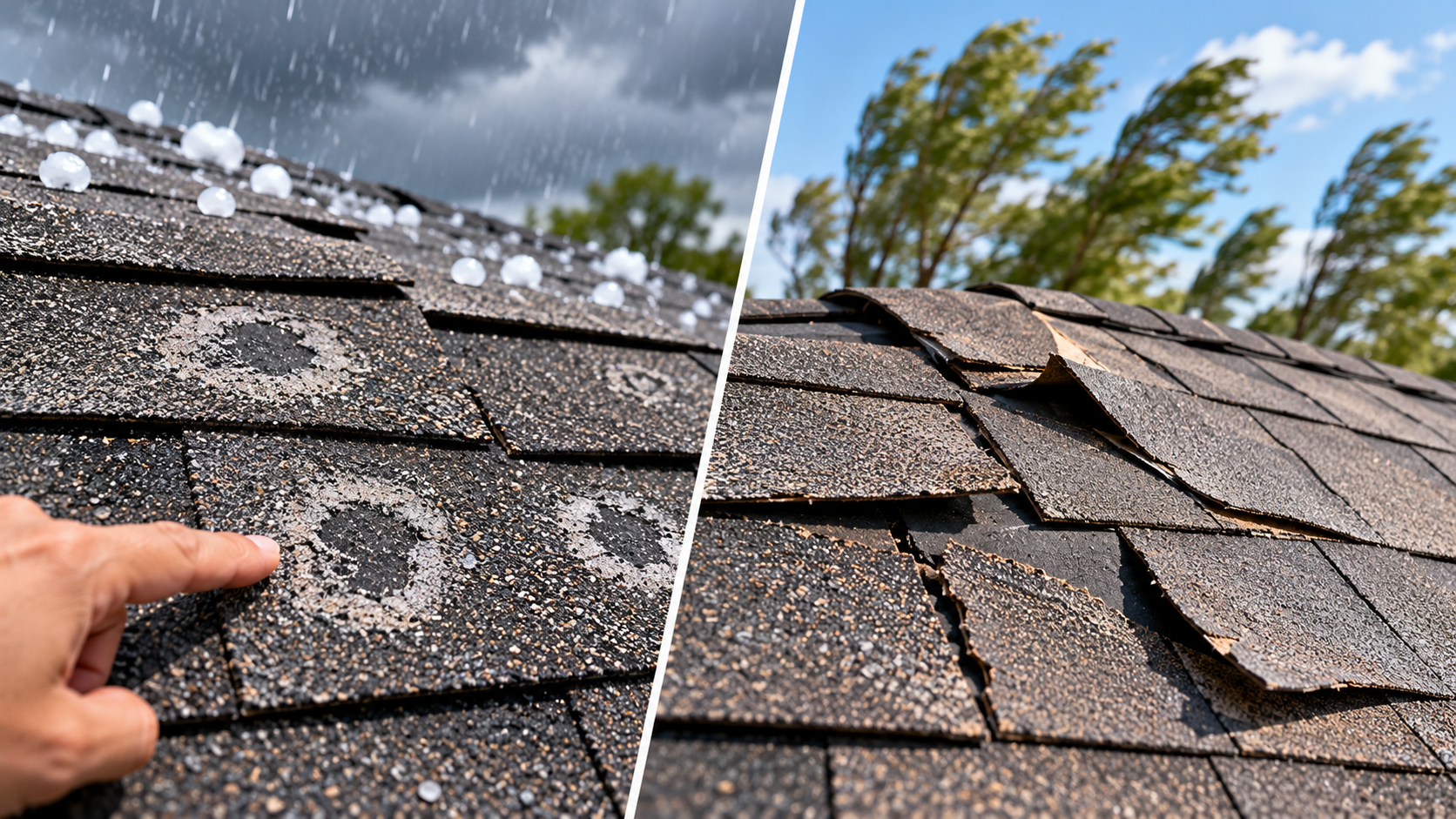
Hail damage shows up as random impact marks, bruises, cracks and bare spots where granules were knocked off. Wind damage shows up as lifted, creased, curled or missing shingles, usually along edges, corners and ridges. Hail strikes from above and scatters. Wind pulls from the side and underneath and concentrates.
The Short Version for Worried Homeowners
Here is the quick cheat sheet:
- Hail: round dents, dark spots, cracks and bare patches in a scattered pattern.
- Wind: missing tabs, creased shingles and torn edges, mostly on exposed areas.
- Both: possible after one big storm, which is common with severe thunderstorms.
Think of hail as a hammer and wind as a crowbar. One hits. The other lifts and pries.
Why the Cause Matters for Repairs and Claims
The cause decides what you fix. A few blown-off tabs may need a simple patch. Widespread hail bruising may point to a bigger job.
It also changes how you talk to your insurer. Some policies treat wind and hail differently, including separate deductibles. Clear documentation helps your claim move smoothly.
If you suspect either one, our team handles storm damage roofing repair from the first look to the final nail.
What Does Hail Damage Look Like on Shingles?
Hail damage on asphalt shingles looks like random bruises or dents where stones struck the surface. You may see dark spots where granules broke loose, exposing the asphalt underneath. Larger hail can crack the shingle or puncture the fiberglass mat. The marks usually appear across the roof, not in one spot.
Random Impact Marks and Bruising
A hail bruise is a soft spot in the shingle. Press it gently from below the roof line, and it feels spongy. From a distance, you often just see a dark, roundish mark.
The key word is random. Hailstones fall in unpredictable patterns. You will not see neat rows or a single streak.
Hail varies in size, shape and hardness. That is why two roofs on the same street can look very different after one storm.
Granule Loss at the Point of Impact
Granules are the tiny stone chips that shield your shingles from sun. When hail hits, it can knock them off in a small circle.
That exposed asphalt ages faster. Over time, the shingle dries, cracks and sheds even more protection.
Granules in your gutters are not proof of hail on their own. Normal wear also sheds them. The clue is where the bare spots sit and how they look.
Cracks and Punctures Through the Mat
Bigger hail can break straight through the shingle. You may see a crack, a split or a tiny hole at the impact point.
Even when no crack shows, the fiberglass mat underneath may be bruised. GAF’s technical guidance notes that hail damage is not always visible right away. Cracks and tears can appear months or years later as the shingle weathers.
That delayed pattern is why a post-storm inspection pays off.
Collateral Clues on Gutters, Flashing and Screens
Your roof is not the only thing hail hits. Check the rest of your home for supporting evidence:
- Dents in soft metals like vents, flashing and chimney caps
- Dings or outward dents in your gutters
- Torn or pierced window screens
- Marks on siding, fences and patio furniture
This collateral damage helps confirm that a hail event actually happened. If your gutters took a beating, our rain gutter services can restore them. Hail can also mark vinyl siding, so our siding replacement team can check that too.
What Does Wind Damage Look Like on Shingles?
Wind damage on shingles appears as lifted, creased, curled, torn or missing tabs. It tends to cluster along roof edges, corners, ridges and slopes facing the storm. Strong gusts get under a shingle, bend it back and break its seal. The damage often follows the wind direction instead of scattering randomly.
Lifted, Creased and Curled Tabs
Wind lifts the free edge of a shingle tab. If it bends back far enough, it leaves a crease across the shingle.
A creased tab is a big red flag. It means the shingle flexed past its limit. Even if it lies flat again, it is weaker and can tear in the next gust.
You may also notice lifted tabs that never settled back down. They look wavy or raised from the ground.
Missing Shingles and Blow-Offs
This is the most obvious sign. You find a bare patch on the roof or shingles in your yard.
Blow-offs often start at the eaves, rakes and ridge lines. Those areas take the most wind pressure.
One missing shingle can expose the felt layer or decking below. Water then finds its way inside quickly.
Broken Sealant Strips
Most asphalt shingles have a sealant strip that bonds each row to the next. Strong wind can break that bond without tearing the shingle.
You may see no obvious damage from the ground. Yet the shingle now sits loose, ready to fly in the next storm.
This is one reason the layers beneath your shingles matter. A complete GAF roofing system works as a team, so each component helps your roof resist wind.
Where Wind Hits First: Edges, Ridges and Corners
Wind attacks the weakest, most exposed spots first:
- The roof edges and eaves
- Ridge caps along the peak
- Corners and rakes
- Slopes facing the storm’s direction
If the damage clings to one side of the roof, suspect wind. If it spreads evenly across every slope, think hail.
Hail vs. Wind Damage Side by Side
This table gives you a quick visual comparison.
| Clue | Hail Damage | Wind Damage |
| Pattern | Random, scattered across the roof | Concentrated on edges, ridges and windward slopes |
| Shingle look | Dark bruises, bare spots, cracks | Creased, lifted, torn or missing tabs |
| Granule loss | Small circles at impact points | Along crease lines or exposed areas |
| Sealant strip | Can loosen from impact | Often broken from lifting |
| Other clues | Dented gutters, vents and flashing | Debris, fallen branches, damaged fences |
| Direction | Often one side or several | Often follows the storm’s wind direction |
Use this as a guide, not a final verdict. Real roofs get messy, and storms rarely follow a script.
Damage Pattern and Location on the Roof
Ask yourself where the damage sits. Evenly scattered marks suggest hail. Damage clustered along edges and one slope suggests wind.
Isolated damage in only one small area is less likely to be hail. Hail typically leaves evidence across several parts of the roof.
Shingle Appearance Up Close
Look at the shingle itself. A hail hit is a dent or a bare circle with sloped edges. A wind hit is a crease, a tear or a loose tab.
Hail leaves impact. Wind leaves movement.
Other Clues Around the Home
Walk the property. Dented soft metals point to hail. Broken limbs and scattered debris point to strong wind.
Neighbors help too. If the whole street has dented mailboxes and cars, hail visited. If trees and fences took the hit, wind did.
What Looks Like Storm Damage but Is Not
Not every flaw on your roof came from last night’s storm. Aging, manufacturing quirks and foot traffic can all mimic storm damage. Knowing the look-alikes keeps you from chasing the wrong problem and helps you speak confidently to an adjuster or roofer.
Normal Granule Wear
Shingles lose granules slowly as they age. Wear along the edges or in water paths is normal.
Granule loss alone does not prove hail. Look for impact marks and collateral damage before you decide.
Blistering and Manufacturing Marks
Small blisters can form from the manufacturing process. They look like tiny bumps or pops and are often mistaken for hail.
Blisters appear in a different pattern than hail hits. A trained eye can tell them apart quickly.
Foot Traffic and Installation Marks
Someone walking the roof can scuff shingles. So can tools, ladders and past repairs.
Hairline cracks, nail pops, curling and isolated missing tabs often have other causes too. That is why a full-roof view matters more than one close-up photo.
How to Check Your Roof Safely After a Storm
You can learn a lot without ever leaving the ground. Walk around your home, look up and scan each slope. Check your gutters, yard and attic too. Never climb a wet or damaged roof. A professional can inspect it safely and document what they find.
What You Can Spot From the Ground
Grab a pair of binoculars and your phone. Look for:
- Missing or raised shingles
- Dark patches or bare spots
- Dented gutters, vents and flashing
- Granules collected at downspout exits
- Debris on the roof or in the yard
Take clear photos from several angles. Date-stamped pictures help your claim later.
Warning Signs Inside the Home
Your attic and ceilings tell the truth fast. Check for:
- Brown or yellow ceiling stains
- Damp insulation
- Daylight peeking through the roof deck
- A musty smell after rain
One homeowner noticed a brown spot on a ceiling after a storm. They called on a Monday morning and had an inspection that afternoon. The fix came two days later. Quick action kept a small problem small.
If you spot stains, our roof leak detection service finds the source, not just the symptom.
Why You Should Not Climb Up There
A roof after a storm can hide soft spots, loose shingles and slick surfaces. One slip changes everything.
Stay on the ground. Let a trained inspector handle the climb. A professional roof inspection service is safer, faster and far more thorough.
What If You Have Both Hail and Wind Damage?
Yes, one storm can cause both. Severe thunderstorms often bring hail and strong gusts together. In that case, you may see impact marks on some shingles and creased or missing tabs on others. A professional inspection separates the two so each type is documented and repaired correctly.
Overlapping Damage on One Roof
Hail can weaken the sealant strips. Then wind finishes the job by lifting the loosened shingles.
So the damage may look like wind, even though hail started the problem. That is why a full inspection beats a quick glance.
Hidden Damage That Appears Months Later
Some damage hides well. A bruised mat can crack later. A loosened seal can fail in the next gust.
During one roof replacement, a homeowner learned their roof had water-damaged sheathing they never knew existed. The crew pointed it out and fixed it properly. Honest inspection finds what the eye misses.
If you are in the Fayetteville area, our Fayetteville roofing team is close by and ready to look.
What to Do After Storm Damage: Documentation and Insurance Steps
Act quickly, but stay calm. Photograph the damage, prevent further water entry and call your insurer. Then book a professional inspection to document everything clearly. Keep receipts for any temporary repairs. Do not sign any contract until you understand the full scope of work.
Document Everything Before You Touch It
Take photos and video of the roof, gutters, siding and yard. Capture wide shots and close-ups.
Write down the date and time of the storm. Note any interior leaks. Save weather reports for your area.
Protect the Roof From Further Leaks
A tarp over exposed areas can prevent water damage while you wait. Most policies expect you to limit further harm.
Keep your receipts. Reasonable temporary repair costs are often part of the claim.
Talking to Your Insurance Company
Call your insurance agent early. Ask about your deductible, your claim deadline and any separate wind and hail terms. Policies vary, so read yours carefully.
An adjuster will inspect the damage. It helps to have your own documentation ready.
Oak Tree Roofing can help with roof insurance claim help, including meeting your adjuster on site.
Why a Professional Damage Report Helps
A detailed report shows exactly what happened and where. Photos, notes and clear findings keep the conversation factual.
It also protects you from missed damage. You get a repair plan that matches the real problem.
Repair or Replace After Hail or Wind Damage?
Repair makes sense when damage is limited to a few shingles and the rest of the roof is healthy. Replacement makes sense when damage is widespread, the roof is near the end of its life, or repeated repairs cost more than starting fresh. An honest inspection should tell you which path fits.
When Repairs Are Enough
Isolated wind damage, such as a few missing tabs, is often a quick fix. A matching patch restores protection.
Small, contained hail damage on a younger roof can also be repaired. The key is that the rest of the roof is sound.
When Replacement Makes Sense
Consider a new roof when you see:
- Hail bruising across most slopes
- Widespread creasing or sealant failure
- An older roof with multiple past repairs
- Repeated leaks after storms
Our roof replacement crews handle everything from tear-off to final inspection.
Choosing Stronger Shingles for North Carolina Storms
If you replace, upgrade smartly. Choose a system built to handle wind and impact.
Our GAF TimberSteel roofing blends a wood shake look with modern storm performance. Our metal roofing is another durable option for harsh weather.
Warranty matters too. Learn how a GAF roof warranty gets registered, and why registration mistakes can void your protection.
Get a Clear Answer on Your Roof From Oak Tree Roofing
Guessing is stressful. Knowing is easy.
Oak Tree Roofing is a GAF certified roofing contractor serving homeowners across North Carolina. We inspect, document and explain what we find in plain language.
You get honest answers with no pressure. If your roof is fine, we say so. If it needs work, we show you the photos first.
We serve Raeford, Laurinburg, Hope Mills and many nearby communities. Call (910) 994-0403 whenever you are ready.
Frequently Asked Questions About Hail Damage vs. Wind Damage on Shingles
How can I tell if my shingle damage is from hail or wind?
Look at the pattern. Hail leaves random dents, bruises and bare spots across the roof. Wind leaves creased, lifted or missing shingles, mostly on edges, ridges and windward slopes. Dented gutters and flashing support hail. Debris and broken limbs support wind. A professional inspection confirms the cause.
Can wind damage and hail damage look the same?
Sometimes. Hail can loosen sealant strips, and wind can then lift those shingles. The result may look like pure wind damage. Granule loss can also come from normal aging. That overlap is why a full-roof inspection gives a more reliable answer than a single photo.
Does homeowners insurance cover both?
Many homeowners policies cover wind and hail damage, but terms vary. Some include separate deductibles for wind or hail. Coverage also depends on your roof’s age and condition. Read your policy and ask your agent about deductibles, deadlines and documentation before you file.
How long after a storm can I file a claim?
Deadlines vary by policy and insurer. Some give a year or less, so do not wait. File as soon as you suspect damage. Quick reporting also helps because evidence is clearer and hidden problems are easier to link to the storm.
Is granule loss always a sign of hail damage?
No. Shingles shed granules naturally as they age. Loss along edges or in water paths is usually normal wear. Hail granule loss appears as small, scattered spots with impact marks and collateral damage nearby. Look at the whole picture, not just the gutter.
Can I have storm damage without a leak?
Yes. Many storm-damaged roofs do not leak right away. Bruised mats and broken seals can stay hidden until the next heavy rain. Waiting for a leak often means a bigger repair. An inspection after the storm catches problems early.
Should I repair or replace damaged shingles?
It depends on how widespread the damage is and how old the roof is. A few blown-off tabs usually mean a repair. Widespread hail bruising or an aging roof often points to replacement. An honest inspection compares both options clearly.
Your Next Step: Schedule a Roof Inspection With Oak Tree Roofing
Hail or wind, the smartest move is the same. Get a trained set of eyes on your roof before the next storm arrives.
Oak Tree Roofing will inspect your shingles, flashing and gutters. We document what we find, explain it simply and help you plan the right fix.
Call (910) 994-0403 or request a roof inspection today. You can also find us on Google Maps and read our reviews. Explore all our service areas to see if we cover your town.