Table of Contents
- Why Your Vent Choice Matters in North Carolina
- Ridge Vents: How They Work, Pros, and Cons
- Box Vents: How They Work, Pros, and Cons
- Turbine Vents: How They Work, Pros, and Cons
- The NC Humidity and Storm Test: Side-by-Side Comparison
- Which Vent Works Best for Your Roof Type?
- Why You Shouldn’t Mix Exhaust Vent Types
- Upgrading Vents During a Roof Replacement
- Not Sure Which Vent Fits Your Roof?
- Frequently Asked Questions About Ridge, Box, and Turbine Vents
- Choose the Right Roof Vent With Oak Tree Roofing
It’s 11 PM on a sticky July night in Hope Mills.
Mike can’t sleep. Somewhere above his bedroom, an old turbine vent squeals every time a breeze drifts by. Then the air goes still. The squealing stops. So does the airflow.
The upstairs feels like a sauna. The AC runs nonstop. And Mike wonders why the vent that’s supposed to cool his attic isn’t doing much of anything.
If you’ve ever looked up at your roof and wondered which vent actually works best, you’re not alone. Ridge vents, box vents, and turbines all promise to move hot air out. But in North Carolina, with heavy humidity, calm summer days, and tropical storm season, they don’t all perform the same.
This guide compares ridge vent vs turbine vs box vent in plain English. You’ll learn how each one works, how they handle NC humidity and storms, which roof types they fit best, and why mixing them can backfire.
Questions about your roof vents? Call Oak Tree Roofing at (910) 994-0403.
Why Your Vent Choice Matters in North Carolina
Your roof vent choice matters in North Carolina because humid air and long, hot summers put constant stress on attics. Exhaust vents must remove heat and moisture every day, not just on windy days. Storm season adds wind-driven rain, so the right vent must ventilate reliably while resisting water intrusion.
Humid Air Needs a Way Out
Humid air carries moisture into your attic from everyday living. If that moisture can’t escape, it condenses on the roof deck.
Over time, trapped moisture can lead to mold, rot, and damp insulation.
Still Summer Days and Storm Season
Many NC summer days are hot, humid, and calm. A vent that depends on wind may barely work when you need it most.
Then hurricane season arrives with strong winds and sideways rain. Your vents need to handle both extremes.
Ridge Vents: How They Work, Pros, and Cons
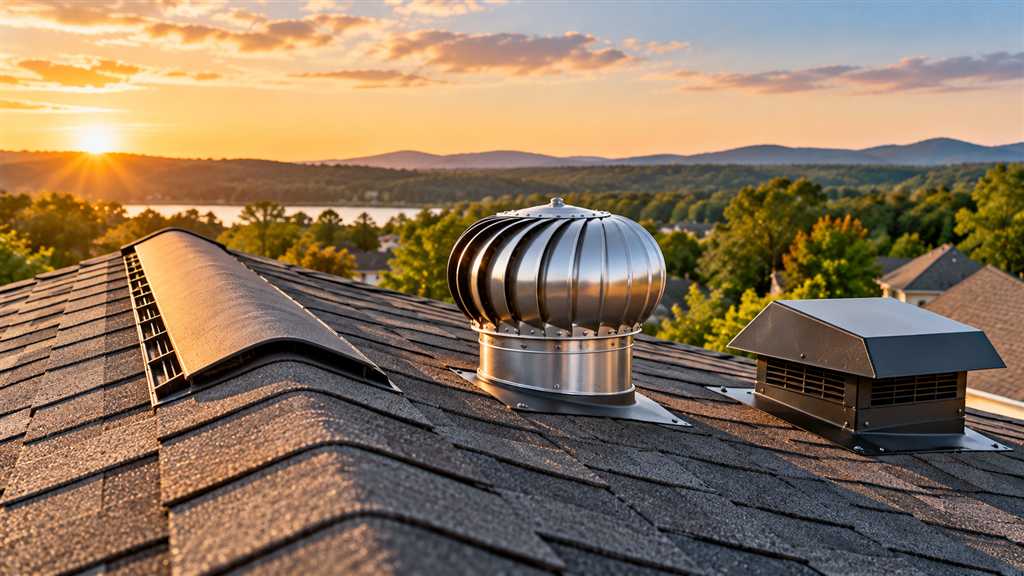
A ridge vent is a continuous exhaust vent installed along the peak of the roof, hidden under ridge cap shingles. It lets hot, moist air escape evenly along the entire ridge. Paired with soffit intake, ridge vents create steady airflow without moving parts, making them a strong choice for many North Carolina homes.
Continuous Airflow Along the Peak
Hot air rises to the highest point of your attic. A ridge vent sits right there, along the whole peak.
Shingle-over ridge vents typically provide about 12 to 20 square inches of net free area per linear foot. Many common products offer around 18.
That steady, even exhaust helps reduce hot spots across the attic.
Why External Baffles Matter in Wind-Driven Rain
Not all ridge vents are equal. Look for designs with an external baffle.
The baffle redirects wind up and over the vent. That creates low pressure that helps pull air out while keeping wind-driven rain from being pushed in. Some filtered ridge vents are also tested for wind-driven rain resistance, so check product ratings.
Where Ridge Vents Fall Short
- They need a long, continuous ridge to work well
- They depend on enough soffit intake
- Poor fastening can let strong winds lift or damage them
Hurricane-force winds can peel poorly secured ridge vents from the roof peak. Proper installation matters as much as the product.
Box Vents: How They Work, Pros, and Cons
Box vents, also called static or louver vents, are square vents installed near the roof peak. They have no moving parts and let hot air escape through covered openings. Box vents work well on roofs with short or broken ridgelines, but several are usually needed, and airflow between them can be uneven.
Static Vents Placed Near the Ridge
Box vents sit high on the roof, close to the ridge. Hot air rises and escapes through each one.
Their covered tops help keep rain out, and their low profile handles wind well.
The Best Fit for Short or Broken Ridgelines
Some roofs don’t have much ridge to work with. Hip roofs, dormers, and complex rooflines often have short or interrupted peaks.
In these cases, box vents can be the better option.
The Dead Zone Problem
Box vents exhaust air in spots, not continuously. Areas between vents can become “dead zones” where warm, moist air lingers.
Placement and quantity matter. Too few box vents is a common problem on older homes.
Turbine Vents: How They Work, Pros, and Cons
Turbine vents, sometimes called whirlybirds, use wind to spin a set of vanes that pull air out of the attic. They can move a lot of air when the wind blows. But on calm, humid days, airflow drops sharply. Older turbines may squeal, rust, stop spinning, and become leak risks.
Wind-Powered Exhaust
Turbines catch passing wind. As the vanes spin, they draw hot air up and out.
On breezy days, they can move a lot of air.
What Happens When the Wind Stops
Calm summer days are common in the Sandhills. When there’s no wind, a turbine works much like a basic opening.
That’s when attics often need ventilation the most.
Noise, Rust, and Leak Risks as Turbines Age
As turbines age, bearings can squeal. Rust can stop them from spinning.
Aging turbines are also more prone to leaks. And if intake is weak, turbines can pull conditioned air from your living space.
If you’ve noticed leaks near roof vents after a storm, our storm damage roof repair in Fayetteville team can take a look.
The NC Humidity and Storm Test: Side-by-Side Comparison
For most North Carolina homes with a long, continuous ridge, a baffled ridge vent paired with soffit intake offers the most consistent airflow. Box vents are a strong choice for short or complex ridgelines. Turbines can move air in wind but perform poorly on calm days and may become maintenance or leak concerns over time.
| Factor | Ridge Vent | Box Vent | Turbine |
|---|---|---|---|
| Airflow consistency | Even, continuous | Localized | Varies with wind |
| Calm, humid days | Works with natural airflow | Works, but uneven | Weak without wind |
| Wind-driven rain | Strong with external baffles | Covered tops help | Risk grows with age |
| Best roof types | Long, continuous ridges | Short, broken, or hip ridges | Limited situations |
| Moving parts | None | None | Yes |
| Maintenance | Low | Low | Bearings and rust |
| Appearance | Nearly invisible | Visible | Most visible |
| Noise | Silent | Silent | Can squeal |
What This Means for Your Home
There’s no single winner for every roof. The best vent depends on your roof shape, attic size, and intake.
Want the full picture on sizing and balance? Our team can calculate your attic’s exact needs during a roof inspection.
Which Vent Works Best for Your Roof Type?
Simple gable roofs with long ridges usually perform best with baffled ridge vents and continuous soffit intake. Hip roofs and complex rooflines may need box vents or a careful mix of hip and ridge ventilation. Older homes with turbines often benefit from switching to a balanced system during a roof replacement.
Simple Gable Roofs With Long Ridges
A long, continuous ridge is ideal for a ridge vent. Paired with soffit intake, it creates smooth airflow from eave to peak.
For example, a 1,500-square-foot attic at the balanced 1/300 ratio needs about 720 square inches of total ventilation. Half, about 360 square inches, comes from exhaust. With a ridge vent rated at 18 square inches per foot, that’s roughly 20 feet of ridge.
Hip Roofs and Complex Rooflines
Hip roofs often have short ridges. Dormers and valleys break up the roofline.
In these cases, box vents or vents designed for hips may work better. Your roofer should calculate whether the ridge provides enough exhaust.
Older Homes With Existing Turbines
Many older homes in Fayetteville, Raeford, and Spring Lake still have turbines. If they’re noisy, rusty, or leaking, a roof replacement is the perfect time to upgrade.
Why You Shouldn’t Mix Exhaust Vent Types
Mixing exhaust vent types, like ridge vents with box vents, turbines, gable vents, or power fans, can short-circuit airflow. Air may move between exhaust vents instead of flowing from soffit intake to the ridge. This leaves parts of the attic poorly ventilated and can even pull rain or conditioned air into the wrong places.
How Mixed Vents Short-Circuit Airflow
Imagine two exits at the top of a room and one entrance at the bottom. Air may move between the two exits instead of traveling through the room.
That’s what happens when different exhaust types compete. Most roofers recommend choosing one exhaust type per attic space.
Don’t Forget Intake
Exhaust vents can only work when there’s enough intake. Soffit or edge intake should equal or exceed exhaust.
Blocked soffits are common, especially when insulation covers them. Clean rain gutters and clear eaves also help keep the lower roof edge working properly.
Upgrading Vents During a Roof Replacement
A roof replacement is the best time to upgrade attic ventilation. Your roofer can remove old turbines or box vents, patch the openings, cut a proper ridge slot, and add or clear soffit intake. Installing storm-ready vents with proper fastening helps protect your attic during North Carolina’s hurricane season.
Removing Old Vents the Right Way
When switching to a ridge vent, old turbines and box vents should be removed. Openings are patched with new decking before shingles go on.
Leaving old vents in place can create leaks and airflow problems.
Installing for Storm Season
- Choose ridge vents with external baffles
- Follow the manufacturer’s fastening instructions
- Make sure ridge cap shingles fully cover the vent
- Confirm balanced intake and exhaust
If you’re planning a GAF roof, remember that enhanced GAF warranties require a GAF attic ventilation product in a properly balanced system. Learn more in our guide to GAF Certified vs Certified Plus vs Master Elite.
Before you sign a contract, review our 12 questions to ask before hiring a GAF roofing contractor in North Carolina.
Not Sure Which Vent Fits Your Roof?
Every roof is different. A professional inspection can tell you whether your current vents are working, what your attic needs, and which option fits your roof best.
Oak Tree Roofing helps homeowners with roof replacement in Fayetteville NC, roofing in Hope Mills, and nearby communities. Call (910) 994-0403 or contact our team.
Frequently Asked Questions About Ridge, Box, and Turbine Vents
Which roof vent is best for humid climates?
For most homes with a long, continuous ridge, a baffled ridge vent paired with soffit intake works best in humid climates. It removes moisture evenly without relying on wind. Homes with short or complex ridgelines may do better with properly placed box vents.
Are turbine vents good in North Carolina?
Turbine vents can move air when the wind blows, but many North Carolina summer days are calm and humid. Without wind, airflow drops. Older turbines may also squeal, rust, or leak. Many homeowners switch to ridge or box vents during a roof replacement.
Do ridge vents leak during hurricanes?
A properly installed ridge vent with an external baffle resists wind-driven rain well. Problems usually come from poor fastening, wide ridge slots, or low-quality vents. Strong winds can lift poorly secured ridge vents, so proper installation is essential during storm season.
Can I use ridge vents and box vents together?
It’s generally not recommended. Combining different exhaust types can short-circuit airflow, causing air to move between vents instead of through the entire attic. Most roofers recommend one exhaust type per attic space, paired with enough soffit or edge intake.
Should I replace turbine vents with a ridge vent?
If your roof has a long, continuous ridge, switching from turbines to a baffled ridge vent often improves airflow and reduces noise and leak risks. The best time to make the switch is during a roof replacement, when old openings can be properly patched.
How do I know if my attic has enough exhaust?
Signs include a very hot attic, hot upstairs rooms, musty odors, damp insulation, and curling or blistering shingles. A roofer can measure your attic, calculate required ventilation, and check whether intake and exhaust are balanced.
Choose the Right Roof Vent With Oak Tree Roofing
Mike finally replaced his roof. His roofer removed the squealing turbines, patched the openings, cleared blocked soffits, and installed a baffled ridge vent.
The first summer, his upstairs felt noticeably cooler. And the only sound at night was the AC cycling off.
The right roof vent doesn’t just move air. It protects your shingles, your attic, and your comfort through every humid summer and every storm season.
Oak Tree Roofing serves homeowners across Fayetteville, Hope Mills, Raeford, Lumberton, Spring Lake, Sanford, Southern Pines, Pinehurst, Dunn, Red Springs, Clinton, and Elizabethtown. Explore our roofing services, learn about North Carolina roofing repair and replacement, check our service areas, or learn more about Oak Tree Roofing. Wondering whether certification really matters for your project? Read does GAF certification actually matter.
Call (910) 994-0403 or find us on Google Maps. Let’s give your attic the airflow it deserves.