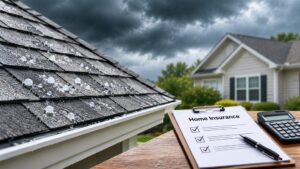
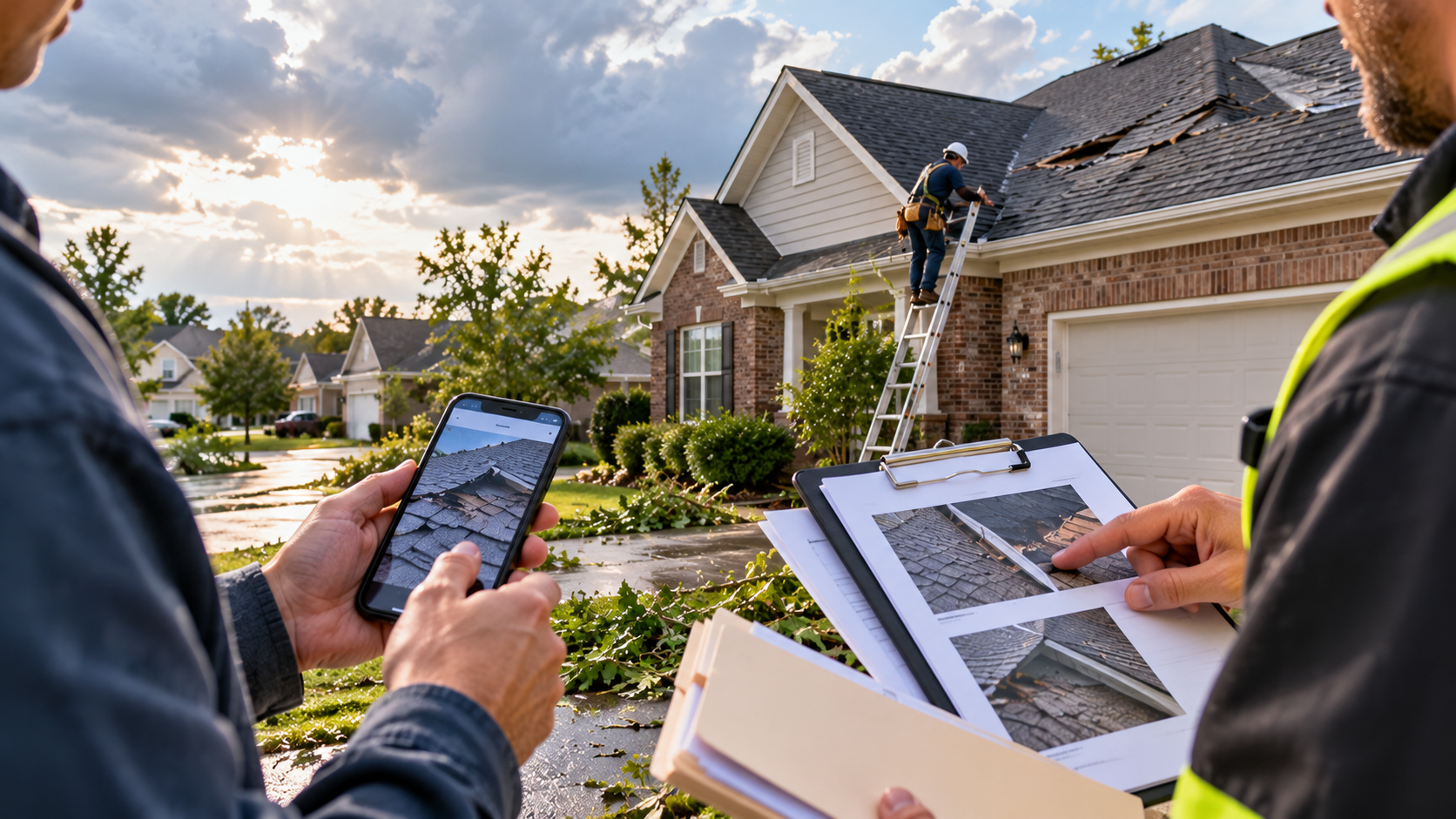
The wind finally dies down. You step outside and spot shingles scattered across the yard. Maybe a brown stain is creeping across your ceiling. Your stomach drops, and one question hits fast: where do I even start?
If you are wondering how to file a roof insurance claim after a storm in North Carolina, you are not alone. Hurricane remnants, tornadoes, hail and straight-line winds hit the Sandhills every year. Many homeowners lose money simply because nobody explained the process.
This guide fixes that. You will get a clear path from the first hour to the final payout. You will also learn what adjusters look for and what to do after a denial.
Oak Tree Roofing handles storm damage roof repair across the region. Want a trained eye on your roof first? Call (910) 994-0403.
Table of Contents
- What to Do Right After a Storm Damages Your Roof
- How to Document Roof Storm Damage Before You Call Your Insurer
- What Your Homeowners Policy Says About Roof Storm Damage
- Should You File a Roof Claim or Pay Out of Pocket?
- How to File Your Roof Insurance Claim in North Carolina
- What Happens When the Insurance Adjuster Inspects Your Roof
- Need Help Documenting Storm Damage on Your Roof?
- Roof Claim Payouts, Depreciation and Supplemental Claims
- What to Do If Your Roof Claim Is Denied or Underpaid
- How to Choose a Roofing Contractor After a Storm in North Carolina
- Common Mistakes That Hurt Roof Insurance Claims
- Frequently Asked Questions About Filing a Roof Insurance Claim in North Carolina
- Talk to Oak Tree Roofing About Your Storm-Damaged Roof
What to Do Right After a Storm Damages Your Roof
Start with safety. Stay off the roof, keep family away from sagging ceilings, and shut off power near wet areas. Then take quick steps to prevent more damage, like covering holes with a tarp. Photograph everything first and keep every receipt. Your insurer expects you to protect the home from further harm.
Get Everyone Safe and Stay Off the Roof
Wet shingles, loose debris and weakened decking cause serious falls. Check the attic and ceilings from inside instead. If water drips near light fixtures, turn off that circuit. Your safety matters more than any claim.
Stop Further Damage With Temporary Protection
Most policies require reasonable steps to limit damage. A tarp over exposed decking or a bucket under a drip counts. Keep it simple and temporary. Permanent repairs should wait until the damage is documented.
Keep Every Receipt for Emergency Repairs
Tarps, plywood and emergency labor often qualify for reimbursement. Save receipts and take photos of the work. Store them in one folder on your phone. You will upload them later with your claim.
How to Document Roof Storm Damage Before You Call Your Insurer
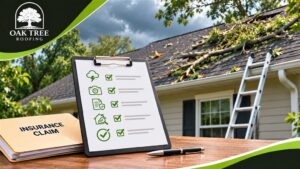
Document damage before you call your insurer. Take wide and close-up photos of the roof from the ground, shingles in the yard, and any ceiling stains. Record the date and storm. Add a professional roof inspection report when possible. Clear evidence ties the damage to one storm, which is what adjusters need.
Photos and Video From the Ground
Walk around the house and shoot every slope. Capture missing shingles, dented vents, bent gutters and debris. Take one wide shot, then a close-up of each problem. A slow video walkaround adds helpful context.
Interior Water Damage and Attic Signs
Look for stains, bubbling paint and damp insulation. Photograph each spot with a coin or tape measure for scale. If the source is unclear, roof leak detection can trace the entry point instead of guessing.
Proof of the Storm Date and Weather Event
Adjusters want damage linked to a specific event. Save a weather alert, news report or neighbor photos from that day. Write down the date and time you first noticed the problem. Small details strengthen your story.
Why a Professional Roof Inspection Strengthens Your Evidence
A trained roofer spots creased shingles, granule loss and lifted flashing that you cannot see from the ground. A written roof inspection report with labeled photos gives you proof that matches how adjusters think.
| What to Capture | Why It Matters |
| Wide and close-up roof photos | Shows scope and detail |
| Ceiling and attic stains | Proves water entered |
| Storm date and weather proof | Links damage to one event |
| Receipts for temporary fixes | Supports reimbursement |
| Roofer’s inspection report | Adds expert backing |
What Your Homeowners Policy Says About Roof Storm Damage
Your homeowners policy lists your deductible and whether roof payouts use actual cash value or replacement cost value. Some North Carolina policies also set a separate percentage deductible for wind or hail. Read your declarations page before filing so the settlement does not surprise you.
Wind and Hail Deductibles in North Carolina
A flat deductible is a set dollar amount. A percentage deductible is a share of your home’s insured value. On a large home, one percent can be thousands of dollars. Check which one applies to wind and hail.
Actual Cash Value vs Replacement Cost
These two terms decide how much money you receive. Roof age drives the difference, so older roofs often see bigger depreciation.
| Term | What It Pays | Best to Know |
| Actual cash value | Replacement cost minus depreciation | Lower upfront check |
| Replacement cost value | Full cost to replace with similar materials | Depreciation may be recoverable |
What Storm Damage Is and Is Not Covered
Sudden damage from wind, hail and fallen trees is commonly covered. Wear, neglect and poor past repairs usually are not. Flood damage often needs separate coverage. Siding, gutters and fascia may be covered too, so ask about siding replacement and rain gutter services in the same claim.
Should You File a Roof Claim or Pay Out of Pocket?
File when repair costs clearly exceed your deductible or when damage is widespread. If a small repair costs less than your deductible, paying out of pocket may be smarter. A professional inspection gives you real numbers, so you can decide with facts instead of fear.
Compare the Repair Cost to Your Deductible
Picture a repair quote of $1,800 with a $2,500 deductible. Filing gains you nothing. Now picture $9,000 of hail damage with the same deductible. Filing makes strong sense. Get the quote first.
Will Filing a Claim Raise Your Premium?
It can, depending on your insurer and claim history. Weather claims often count less against you than preventable ones, but policies differ. Ask your agent how storm claims affect renewal before you decide.
When Filing Makes the Most Sense
File when damage is widespread, when leaks reach the interior, or when the roof is near the end of its life. Homeowners in Fayetteville often discover hidden hail bruising only after an inspection.
How to File Your Roof Insurance Claim in North Carolina
Call your insurance company or use its app, report the storm damage, and get a claim number. Report promptly, because policies set notice deadlines. Share your photos, describe only what you saw, and ask when an adjuster will visit. Keep a log of every call, name, and date.
Call Your Insurer and Get a Claim Number
Use the number on your policy or the insurer’s app. Give the storm date and a brief description. Write down the claim number right away. You will need it for every follow-up.
Filing Deadlines and Why Timing Matters
Policies require prompt notice, and some set separate time limits for lawsuits. Waiting also makes it harder to prove the storm caused the damage. Read your policy or ask your agent for exact deadlines.
What to Say and What to Avoid Saying
Stick to facts. Say what you saw and when. Avoid guessing about cause, age of the roof, or old repairs. If you are unsure, say you will confirm. Honest and simple works best.
Submitting Your Documentation
Upload photos, receipts and your roofer’s report through the claim portal. Keep copies of everything you send. Follow up in writing so you have a record of each request.
What Happens When the Insurance Adjuster Inspects Your Roof
The adjuster inspects the roof, measures damage, and writes an estimate for your insurer. Be present, share your photos, and point out every problem area. Ask for a copy of the report. A roofer on site can show documented damage, though your insurer makes the final call.
How to Prepare for the Adjuster Visit
Gather your photos, policy, receipts and roofer’s report. Make a list of every problem you noticed, inside and out. Clear access to the attic. Being organized shows the damage is real.
What Adjusters Look For on a Storm-Damaged Roof
They check for hail impacts, creased or missing shingles, damaged flashing and soft decking. They also look for signs of age and wear. That is why storm-date proof matters so much.
Having Your Roofer Present During the Inspection
A roofer can walk the roof, point out documented damage and explain what repairs need. We do this for clients regularly. We do not act as your adjuster or negotiate on your behalf. That role belongs to you or a licensed public adjuster.
How to Read the Adjuster’s Estimate
Compare each line to your roofer’s scope. Look for missing items such as drip edge, underlayment, ventilation and code-required work. If something is missing, ask in writing for a review.
Need Help Documenting Storm Damage on Your Roof?
You do not have to figure this out alone. Our team inspects the roof, photographs every issue and gives you a clear written report. You walk into your claim with proof, not guesses.
Ready to start? Schedule a no-pressure roof inspection or call (910) 994-0403 today.
Roof Claim Payouts, Depreciation and Supplemental Claims
Many insurers pay the actual cash value first, which is replacement cost minus depreciation. If your policy covers replacement cost, you can often recover the held-back depreciation after repairs are done and documented. If crews find hidden damage later, your contractor can help you file a supplement.
How Claim Payments Are Issued
Checks often name you and your mortgage company. The lender may hold funds until work is complete. Ask your insurer how payments are released so repairs do not stall.
Recovering Depreciation After Repairs
Send your final invoice and completion photos to the insurer. That proof can release the withheld amount. If you plan a full roof replacement in Fayetteville, keep every document organized.
Insurance pays for like-kind materials. Upgrades such as metal roofing usually cost extra. Also confirm your GAF roof warranty gets registered properly.
Filing a Supplement for Hidden Damage
Rotted decking and hidden leaks often appear only after old shingles come off. Document them with photos before covering them up. Your contractor sends the findings, and you submit a supplemental claim.
What to Do If Your Roof Claim Is Denied or Underpaid
If your claim is denied or underpaid, ask for the decision in writing and request a re-inspection with your roofer’s report. You can also use the appraisal clause, if your policy has one. Still stuck? File a complaint with the North Carolina Department of Insurance Consumer Services at 1-855-408-1212.
Common Reasons Roof Claims Get Denied
Insurers often cite wear and tear, pre-existing damage, late reporting or missing documentation. Many of these are fixable with better evidence. A denial is not always the final word.
Request a Written Explanation and Re-Inspection
Ask which policy section applies and what evidence they used. Then submit your roofer’s report, dated photos and weather proof. Request a second inspection in writing.
Using the Appraisal Clause
Some policies let each side hire an appraiser to settle a pricing dispute. Review the exact wording of your policy first. This route can be faster than court.
Filing a Complaint With the NC Department of Insurance
The department reviews consumer complaints about claim handling. Bring your claim number, timeline and documents. Clear records make your case easier to follow.
How to Choose a Roofing Contractor After a Storm in North Carolina
You choose your roofer. Insurers may suggest one, but the decision is yours. Pick a local, insured contractor with verifiable reviews and manufacturer credentials. Avoid door-knockers who pressure you to sign fast, ask for full payment upfront, or promise to cover your deductible. Those are classic storm chaser warning signs.
Your Right to Choose Your Own Contractor
No one can force a contractor on you. Get at least one written scope and compare it to the adjuster’s estimate. Take your time.
Red Flags of Storm Chasers
Out-of-state plates, no local address and pushy sales scripts are warning signs. Be wary of anyone who offers to waive your deductible. That promise is a red flag and can be illegal.
What a Trusted Local GAF Certified Roofer Provides
A GAF certified roofing contractor meets strict standards and can offer stronger warranty options. Learn how to verify a roofer is actually GAF certified before you sign anything.
Why a Roofer Cannot Act as Your Adjuster
Negotiating a claim for payment requires a public adjuster license in North Carolina. A good roofer documents, repairs and communicates. Use these questions to ask before hiring a GAF roofing contractor.
Common Mistakes That Hurt Roof Insurance Claims
Waiting Too Long to Report the Damage
Delays make it harder to link damage to one storm. Report quickly, even if you are still gathering details.
Making Permanent Repairs Before Documenting
Once shingles are replaced, the evidence is gone. Photograph and inspect first.
Accepting the First Offer Without a Review
The first estimate may miss items. Compare it to your roofer’s scope before you agree.
Blurring Storm Damage With Pre-Existing Wear
Be honest about old issues. Separate them clearly from new storm damage, so one does not sink the other.
Frequently Asked Questions About Filing a Roof Insurance Claim in North Carolina
How long do I have to file a roof claim in North Carolina?
Deadlines depend on your policy. Most require prompt notice after a storm, and some set separate time limits for lawsuits. Check your policy or call your agent today. Reporting quickly also protects your evidence.
Will insurance pay for a full roof replacement?
Sometimes. If damage is widespread or repairs are not practical, insurers may approve replacement. Roof age, policy terms and storm severity all matter. An inspection report helps show whether repair or replacement fits.
Can my roofer talk to my insurance adjuster?
Yes. A roofer can meet the adjuster, show documented damage and explain the repair scope. Your roofer cannot negotiate as your adjuster. Only you or a licensed public adjuster can do that.
Does a roof claim raise my insurance rates?
It might. Rate changes depend on your insurer, claim history and location. Ask your agent how storm claims affect renewal before you file, so you can weigh the cost.
What if my roof claim is denied?
Ask for the denial in writing, then submit stronger evidence and request a re-inspection. You can also try the appraisal clause or file a complaint with the NC Department of Insurance.
Do I need a roof inspection before filing?
It is not required, but it helps. A professional inspection documents hidden damage and gives you repair numbers. That makes it easier to decide whether filing is worth it.
Talk to Oak Tree Roofing About Your Storm-Damaged Roof
A storm can leave you stressed and unsure. A clear plan and the right documentation turn that stress into action. Oak Tree Roofing inspects, documents and repairs storm-damaged roofs with honest advice and no pressure.
We serve homeowners in Raeford, Hope Mills, Laurinburg, Southern Pines and across the Sandhills.
Call (910) 994-0403 or book your roof inspection online. We are available Monday to Saturday, 7 AM to 8 PM, and closed Sunday. Find us on Google Maps.
This article offers general information and is not legal or insurance advice. Review your own policy and speak with your insurer for specifics.