In This Guide
- Why Does Storm Season Put North Carolina Roofs at Risk?
- What Can You Safely Check on Your Roof From the Ground?
- Which Roof Weak Spots Do Homeowners Overlook?
- How Do Trees, Debris and Drainage Affect Storm Readiness?
- Which Roof Upgrades Help Handle High Winds?
- How Do You Document Your Roof Before the Next Storm?
- When Is It Time to Call a Professional Roofer?
- What Should You Do During and After a Storm?
- Frequently Asked Questions About Storm Season Roof Prep
- Protect Your Home With Oak Tree Roofing
The wind shifts around midnight. Rain starts blowing sideways. By morning, a brown spot spreads across your bedroom ceiling. The storm found a weak spot you never knew existed.
North Carolina homeowners learn this lesson every year. A roof does not need a direct hurricane hit to fail. Tropical remnants, summer thunderstorms and sudden tornado warnings all test the same shingles.
The good news is that most storm damage starts small. Small problems are easy to catch early. As a Fayetteville roofing contractor, we have seen both outcomes. The roofs that survive are usually the ones someone checked first.
This guide shows you how to prepare your roof for storm season in North Carolina. You will learn what to check, what to fix and when to call a pro. Want a trained set of eyes on your roof right now? Call Oak Tree Roofing at (910) 994-0403.
Why Does Storm Season Put North Carolina Roofs at Risk?
Storm season puts NC roofs at risk because wind, heavy rain and flying debris reach well past the coast. Hurricanes and tropical storms push strong gusts inland. Summer thunderstorms add hail and sudden wind. Aging shingles, loose flashing and clogged gutters then give water an easy way inside.
How Hurricanes and Tropical Remnants Reach Inland Cities
Atlantic hurricane season runs from June through the end of November. October still counts. Late-season storms can bring days of rain and wind.
Fayetteville sits well inland, yet Hurricanes Matthew and Florence both brought heavy rain and gusts here. Long rain bands soak a roof for hours. Wind-driven rain pushes water sideways under shingles. That is where leaks begin.
Tornadoes, Hail and Summer Thunderstorms
Not every storm comes from the ocean. Spring and summer thunderstorms can produce hail, straight-line winds and tornado warnings across the Sandhills and Cumberland County.
Hail bruises shingles and knocks off protective granules. Straight-line winds lift shingle edges. Neither one always looks dramatic from the yard. Both shorten the life of your roof.
Why Older Roofs Fail First
Asphalt shingles age. Years of heat, sun and rain weaken the sealant strips that hold each shingle down. Once an edge lifts, even an ordinary gust can tear it away.
That is how a tiny gap turns into storm damage roof repair. A roof near the end of its life has fewer defenses. Checking it before the storm gives you time to act.
What Can You Safely Check on Your Roof From the Ground?
You can safely check your roof from the ground with binoculars, a flashlight and a camera. Walk the yard and scan for missing shingles, lifted edges, damaged flashing and sagging gutters. Then check your attic for stains or daylight. Never climb onto a roof yourself.
Roofs are slick and steep. Falls cause serious injuries every year. Keep your feet on the ground and let a zoom lens do the work.
Missing, Curling or Lifted Shingles
Look for shingles that curl at the edges or lie crooked. Watch for bald patches where granules have worn off. Notice any dark streaks of exposed material.
Even one missing shingle opens the roof deck to wind-driven rain. Loose shingles can also become flying debris in high winds. Write down where you spot them.
Flashing, Pipe Boots and Roof Vents
Flashing is the thin metal that seals joints around chimneys, walls and vents. Pipe boots seal the plumbing vents that poke through your roof.
These small parts fail often. Rubber boots crack in the sun. Flashing pulls loose or rusts. Water finds these gaps first, which makes them common leak sources.
Gutters and Downspouts
Look for sagging gutters, pulled-away sections and overflow stains on siding. Check that downspouts drain several feet from your foundation.
Gutters carry storm water away from your roof edge and walls. When they fail, water backs up under the shingles. We cover gutter care again below.
Warning Signs Inside Your Attic
Grab a flashlight and climb up to your attic hatch on a dry day. Look for dark stains on the underside of the roof deck. Notice any pinpoints of daylight. Sniff for a musty smell.
Damp insulation and rusty nails also signal trouble. If you see any of these, schedule roof leak detection before the next storm. A slow leak never fixes itself.
Which Roof Weak Spots Do Homeowners Overlook?
Homeowners most often overlook ridge caps, sealant strips, roof edges, soffits, skylights and chimneys. These areas take the most wind and water, yet they sit out of sight. A quick look at each spot can reveal damage that ordinary checks miss.
Ridge Caps and Aging Sealant Strips
Ridge caps cover the peak of your roof. Wind hits that peak first and hardest. Cracked or missing caps let rain run straight into the attic.
Sealant strips are tiny adhesive lines under each shingle. When they dry out, shingles stop gripping. A roof is more than shingles alone, and every layer matters. Our guide to the complete GAF roofing system explains how underlayment, vents and starter strips work together.
Soffits, Fascia and Roof Edges
Roof edges face the strongest uplift during a storm. If the fascia board is rotted or loose, wind can grab the shingles above it.
Damaged soffits also let rain and pests into the attic. Press gently on the wood from a ladder base. Soft or crumbling spots mean it is time for repairs.
Skylights and Chimneys
Both features break the smooth surface of your roof. That means extra seams and extra places for water to enter.
Look for cracked caulk, rusty flashing and stains on the ceiling nearby. Chimney crowns can crack as well. A small gap today becomes a leak in the first heavy downpour.
How Do Trees, Debris and Drainage Affect Storm Readiness?
Trees, debris and drainage affect storm readiness because they decide how fast water leaves your roof and what lands on it. Overhanging limbs can crash through shingles. Clogged gutters trap water against the roof edge. Clear branches and gutters before storm season peaks.
Overhanging Limbs and Falling Branches
A healthy tree can still drop a limb in strong wind. Branches that hang over the roof also scrape shingles in daily breezes.
Trim limbs that reach your roofline. Hire a licensed tree service for large trees or limbs near power lines. Remove dead branches first. They snap the easiest.
Roof Valleys and Standing Water
Valleys are the V-shaped channels where two roof slopes meet. They carry the most water, so leaves collect there fast.
A clogged valley acts like a dam. Water spreads under the shingles instead of running off. Clear leaves from the edges and gutters, and let a roofer handle the valleys. Our rain gutter services keep storm water moving off your roof and away from your foundation.
Which Roof Upgrades Help Handle High Winds?
Upgrades that help a roof handle high winds include hurricane straps, stronger deck attachment, wind-rated shingles and impact-resistant materials. Each one reduces the chance of uplift or impact damage. The right choice depends on your roof’s age, budget and local storm exposure.
Hurricane Straps and Roof Deck Attachment
Hurricane straps are metal connectors that tie roof framing to the walls. The North Carolina Department of Insurance encourages homeowners to add them. They help resist wind uplift.
Roof deck nailing matters too. Properly spaced fasteners hold the deck tight against the framing. During a replacement, we check deck attachment before any new layer goes on.
Wind-Rated and Impact-Resistant Shingles
Not all shingles are equal. Some carry higher wind ratings and thicker, tougher construction. Impact-resistant options stand up better to hail and flying debris.
Ask any contractor to show you the wind rating of the shingle they plan to use. Then ask how it is installed. Even strong shingles fail if the installation is sloppy.
Stronger Roofing Systems Built for Heavy Weather
If your roof is near the end of its life, an upgrade can be smarter than another repair. GAF TimberSteel gives you a wood shake look with steel-based strength for tough weather.
Looking for maximum durability? Consider metal roofing in NC. It sheds water fast and holds up well in wind. Whatever you choose, learn what the manufacturer’s coverage includes. This breakdown of GAF roof warranties compared can help you ask the right questions.
How Do You Document Your Roof Before the Next Storm?
Document your roof by taking dated photos of every slope, the attic, gutters and any existing wear before storm season. Save them in the cloud. If damage happens later, these before-and-after images help show what changed. Insurers and roofers both rely on clear records.
Here is a simple photo plan:
| What to Photograph | How to Capture It | Why It Matters |
| Each roof slope | Wide shots from the ground, all four sides | Shows overall condition |
| Shingle close-ups | Zoom on any wear, curling or repairs | Proves existing wear versus new damage |
| Flashing and vents | Zoom on chimney, pipe boots and vents | Shows sealing condition |
| Gutters and downspouts | Photos of each run and the connections | Shows drainage before the storm |
| Attic roof deck | Flashlight shots of the underside | Shows a dry, stain-free baseline |
| Ceilings and walls | Photos of each room below the roof | Helps spot new leaks later |
Include a date stamp and your address in the file names. Back up the files to your phone and the cloud. Updating the set each spring and fall takes only a few minutes.
Wind, Hail and Flood Coverage Basics in North Carolina
Insurance can feel confusing, so read your policy before the storm. The North Carolina Department of Insurance notes that wind and flood damage are covered separately. Flood coverage usually carries a waiting period before it starts. That means you cannot wait for a forecast to buy it.
Also check your deductible. Some policies use a separate, higher deductible for wind or hail. Call your agent and ask what applies to your roof. Ask about roof age rules too, since older roofs can receive reduced payouts.
When Is It Time to Call a Professional Roofer?
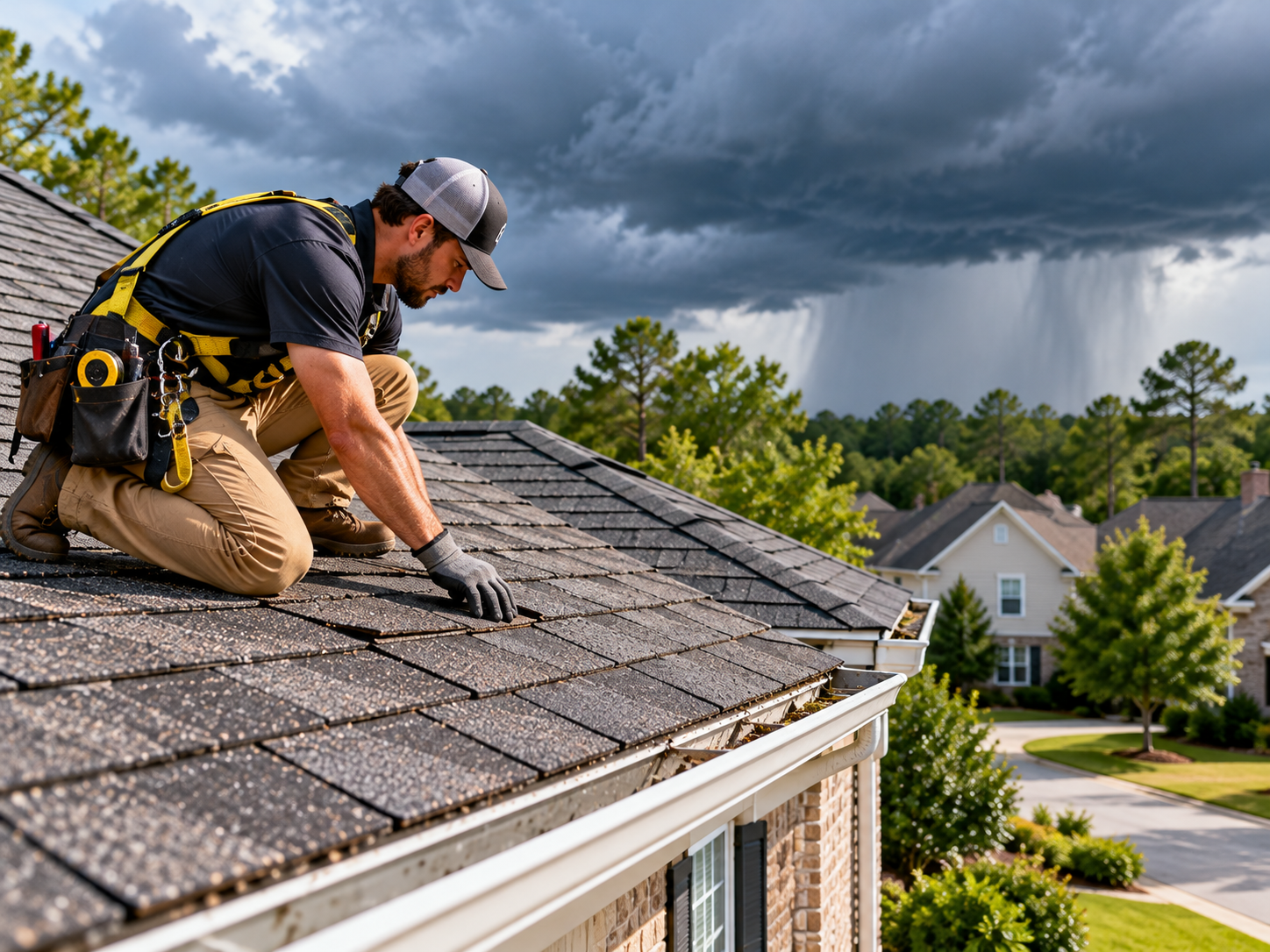
Call a professional roofer when you spot missing shingles, attic stains, damaged flashing or a roof near the end of its lifespan. Also call before storm season peaks, since roofers book up fast. A trained eye finds problems that binoculars and phone cameras cannot.
What a Storm-Season Roof Inspection Covers
A thorough roof inspection goes far beyond a quick walk. We check shingles, flashing, vents, ridge caps, roof edges and the attic. We also look at gutters and the deck.
One Fayetteville homeowner called us after spotting a brown ceiling stain following a storm. We inspected the same day, explained the cause and finished the repair two days later. We even shared before-and-after photos. Catching a leak early kept a small fix from becoming a big one.
On another job, our crew found water-damaged sheathing the owner never knew about. We showed it, fixed it properly and kept the project honest. Surprises like that are why inspections matter.
Why Booking Before the Rush Matters
After a major storm, roofing schedules fill within days. Crews get stretched thin, and materials can run short. Homeowners who waited then wait even longer.
Booking now gives you options. You can compare repair and replacement choices without pressure. You can also choose a GAF certified roofing contractor with a proven track record. Ready to schedule a no-pressure roof inspection? Call (910) 994-0403 and we will find a time that fits.
What Should You Do During and After a Storm?
During a storm, stay indoors and away from windows. After it passes, check for damage from the ground, take photos and call a roofer. Use a tarp only as a temporary fix. Never climb onto a wet or damaged roof, and watch for downed power lines.
Stay Safe Before You Look for Damage
Wait until the wind and lightning end. Then walk around your home and look up from a safe distance. Watch for hanging branches, fallen limbs and sagging gutters.
If you see a downed power line, stay far away and call the utility. If water is dripping inside, move valuables and place buckets. Safety always comes before the roof.
Temporary Steps to Limit Leaks
Take photos of everything before moving anything. Then cover openings with a roofing tarp or call a roofer to do it. A proper tarp needs secure fastening, and a poor one can make damage worse.
Remember, a tarp buys time and nothing more. Next comes the big question. Our guide on roof repair vs replacement after storm damage explains how to decide.
How to Spot Roofing Scams After a Storm
Storms bring out out-of-town crews who knock on doors with big promises. The North Carolina Department of Insurance warns homeowners about this every storm season.
Protect yourself with these steps:
- Hire only licensed and insured contractors.
- Never pay the full amount upfront.
- Get a written contract and scope of work.
- Be wary of anyone who pressures you to sign fast.
- Check certifications for yourself. This guide shows how to verify a roofer is GAF certified before you sign anything.
Frequently Asked Questions About Storm Season Roof Prep
How often should I have my roof inspected in North Carolina?
Plan on at least one professional inspection per year, ideally before storm season. Add another after any major storm, hail event or high-wind day. Older roofs benefit from checks every spring and fall because small damage grows quickly in North Carolina’s heat and humidity.
Can I check my roof myself?
You can check from the ground with binoculars, a camera and a flashlight in the attic. Do not climb onto the roof. Steep slopes, wet shingles and hidden damage make falls likely. Leave close-up checks and repairs to an insured roofer.
What are the first signs of storm damage on a roof?
Common early signs include missing or lifted shingles, granules in the gutters, dented flashing and attic stains. Inside, watch for brown ceiling spots, peeling paint and musty smells. Signs can be subtle, so a professional inspection is the safest way to confirm.
Does homeowners insurance cover roof damage from storms in NC?
Most policies cover sudden wind and hail damage, though details vary. Flood damage usually needs separate coverage. Deductibles and roof age rules can change your payout. Review your policy now, and ask your agent how wind and hail claims work for your roof.
Do inland homes need hurricane straps?
Inland homes can benefit from them too. Tropical storms and strong thunderstorms still produce damaging gusts well away from the coast. Hurricane straps help tie the roof to the walls. A roofer can tell you whether your framing already has them.
Is it too late to prepare once storm season has started?
No. Storm season runs through the end of November, and severe weather can strike any time of year in North Carolina. Quick fixes such as repairing loose shingles, clearing gutters and sealing flashing still help. If your roof is worn out, a full roof replacement in Fayetteville may be the smarter move.
Protect Your Home With Oak Tree Roofing
Storm season will keep coming back. A prepared roof lets you sleep through the next one instead of watching the ceiling.
Start with the simple steps. Check from the ground, clear the gutters, trim the trees and document everything. Then let a professional confirm what you cannot see.
Oak Tree Roofing is a GAF certified, fully insured roofing company serving homeowners across Fayetteville and the Sandhills. We are open Monday to Friday from 7 AM to 6 PM and Saturday from 8 AM to 4 PM, with emergency service available on Sunday. We offer honest answers, clear communication and work that lasts.
Call (910) 994-0403 or contact our team online to schedule your no-pressure roof inspection.
We proudly serve Fayetteville, Raeford, Hope Mills, Laurinburg and Southern Pines. See every town on our service areas page.
Visit us at 1402 Sapona Rd, Fayetteville, NC, or find us on Google Maps.