Table of Contents
- How Roof Ventilation Works
- Intake vs Exhaust: The Two Halves of a Healthy Attic
- How Much Ventilation Does Your Attic Need?
- Common Ventilation Mistakes That Cause Problems
- What Poor Airflow Does to Your Shingles and Home
- How Ventilation Affects Your Shingle Warranty
- Why Sandhills Heat and Humidity Raise the Stakes
- Signs Your Attic Isn’t Breathing Properly
- How Roofers Fix Ventilation During a Replacement
- Not Sure If Your Attic Is Breathing Right?
- Frequently Asked Questions About Roof Ventilation and Warranties
- Protect Your Roof and Your Warranty With Oak Tree Roofing
Karen bought her Raeford home with a roof that was only eight years old. It looked great from the street.
Then one summer, she noticed something odd. The shingles on the back slope were curling at the edges. A few looked blistered, almost bubbled.
“No problem,” she thought. “It’s under warranty.”
She filed a claim. The response surprised her. The damage appeared to come from excessive attic heat, not a manufacturing defect. And damage caused by poor ventilation wasn’t covered.
Karen’s roof wasn’t cheap. Her shingles weren’t bad. Her attic simply couldn’t breathe.
This happens more often than most homeowners realize. Roof ventilation is invisible from the yard, so it’s easy to ignore. But it quietly shapes how long your shingles last, how comfortable your home feels, and what your warranty actually covers.
This guide explains how roof ventilation works, how much your attic needs, the mistakes that cause damage, and how poor airflow can affect your shingle warranty. You’ll also learn the warning signs and how roofers fix ventilation during a replacement.
Questions about your attic? Call Oak Tree Roofing at (910) 994-0403.
How Roof Ventilation Works
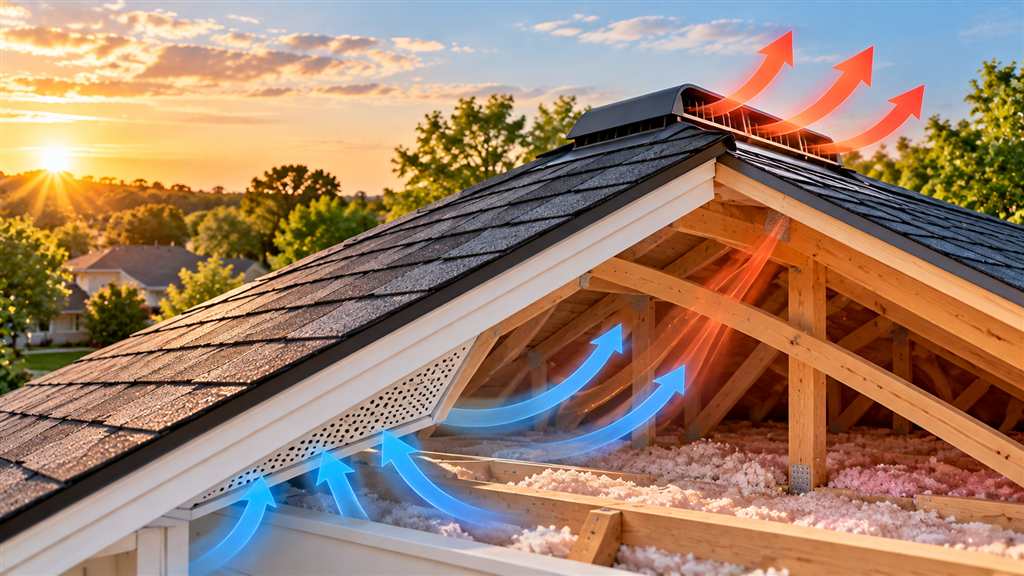
Roof ventilation lets fresh air enter low on the roof and hot, moist air escape near the top. This constant airflow keeps attic temperatures closer to outdoor levels and removes moisture. A properly ventilated attic protects shingles from heat damage, reduces condensation, and helps your home stay more comfortable.
Your Attic Needs to Breathe
Think of your attic like a pair of lungs. It needs to breathe in and breathe out.
Without airflow, heat builds up under the roof deck. Moisture from everyday living rises into the attic and gets trapped.
Over time, that heat and moisture take a toll.
The Natural Airflow Behind a Healthy Roof
Hot air rises. A good ventilation system uses that simple fact.
Cool air enters through vents near the eaves. As it warms, it rises and exits through vents near the ridge. This steady flow keeps the attic drier and cooler.
Intake vs Exhaust: The Two Halves of a Healthy Attic
A healthy attic needs both intake and exhaust ventilation. Intake vents, usually in the soffits, let fresh air in at the lowest part of the roof. Exhaust vents, such as ridge vents, let warm air out at the highest point. One without the other cannot create proper airflow.
Intake Vents: Where Fresh Air Enters
Intake vents sit low on the roof, usually in the soffits under the eaves. They’re the starting point for airflow.
Without enough intake, exhaust vents have nothing to pull from.
Exhaust Vents: Where Hot, Moist Air Leaves
Exhaust vents sit near the ridge. They release the hot, moist air that rises to the top of the attic. Not sure which type suits your roof? Compare them in our guide to ridge vent vs turbine vs box vent.
| Vent Type | Location | Role | Notes |
|---|---|---|---|
| Soffit vents | Under the eaves | Intake | Most common intake option |
| Edge intake vents | Near the roof edge | Intake | Helpful when soffits are limited |
| Ridge vents | Along the roof peak | Exhaust | Continuous, low-profile airflow |
| Box or static vents | Near the ridge | Exhaust | Common on older or complex roofs |
| Power attic fans | On the roof or gable | Exhaust | Must be designed carefully |
| Gable vents | Gable walls | Varies | Can interfere with other systems |
How Much Ventilation Does Your Attic Need?
Under the International Residential Code, attics generally need 1 square foot of net free ventilation area for every 150 square feet of attic floor. That can drop to 1 per 300 square feet when ventilation is balanced, with 40% to 50% of it high on the roof and the rest at the eaves. Local codes may vary.
Understanding Net Free Area
Every vent has a rating called net free area, or NFA. It measures how much open space air can actually pass through.
Two vents that look the same can move very different amounts of air.
The 1/150 and 1/300 Rules Explained
The model code allows the lower 1/300 ratio only when upper vents are placed within 3 feet of the ridge and provide 40% to 50% of the required area. The rest comes from eave or soffit vents.
| Attic Floor Area | Total NFA at 1/150 | Total NFA at 1/300 |
|---|---|---|
| 1,000 sq ft | About 960 sq in | About 480 sq in |
| 1,500 sq ft | About 1,440 sq in | About 720 sq in |
| 2,000 sq ft | About 1,920 sq in | About 960 sq in |
These are simple examples. Your roofer should calculate your home’s exact needs.
Why Balance Matters as Much as Size
Intake should equal or exceed exhaust. If exhaust is stronger, it can pull air from the living space through openings like recessed lights or attic access doors.
That wastes conditioned air and can drag moisture into the attic.
Common Ventilation Mistakes That Cause Problems
The most common ventilation mistakes include too little intake, mixing different exhaust types on the same roof, insulation blocking soffit vents, and bathroom fans venting into the attic. These problems disrupt airflow, trap heat and moisture, and can shorten shingle life even when the roof looks fine from the ground.
Too Little Intake
Many homes have plenty of exhaust vents but not enough intake. The result is weak airflow and hot spots.
Mixing Different Exhaust Types
Combining ridge vents with box vents or power fans can short-circuit airflow. Air may flow between exhaust vents instead of moving through the whole attic.
GAF warns that combining soffit and ridge vents with a power fan could cause reverse airflow and even water leaking into the attic.
Insulation Blocking Soffit Vents
Blown-in insulation often covers soffit vents. From outside, the vents look fine. Inside, they’re buried.
Baffles help keep air channels open.
Bathroom Fans Venting Into the Attic
Bathroom and kitchen fans should vent outdoors, not into the attic. Dumping warm, humid air into the attic invites condensation and mold.
What Poor Airflow Does to Your Shingles and Home
Poor attic airflow traps heat and moisture. Excess heat can speed up shingle aging, leading to blistering, curling, and granule loss. Trapped moisture can cause mold, rot, rusty nails, and damp insulation. Poor ventilation can also make upstairs rooms hotter and increase cooling costs during long summers.
Heat Damage: Blistering, Curling, and Early Aging
Asphalt shingles are designed to handle heat. But constant extreme attic heat bakes them from below.
Over time, that can contribute to:
- Blistering
- Curling edges
- Granule loss
- Brittle shingles
Moisture Damage: Mold, Rot, and Rusty Nails
Warm, humid air condenses on cooler surfaces. In an attic, that means the underside of the roof deck.
Repeated moisture can lead to mold, wood rot, rusty nails, and damp insulation.
Higher Cooling Bills and Hot Upstairs Rooms
A hot attic pushes heat down into your living space. Your AC works harder. Upstairs bedrooms feel stuffy, even with the thermostat set low.
How Ventilation Affects Your Shingle Warranty
Shingle warranties cover manufacturing defects, but damage caused by inadequate ventilation is typically excluded. GAF states its base shingle warranty remains in effect regardless of ventilation, yet ventilation-related damage isn’t covered. Enhanced GAF warranties go further, requiring a GAF ventilation product in a properly balanced intake and exhaust system.
What Base Shingle Warranties Typically Exclude
Poor ventilation doesn’t usually cancel your entire warranty. Instead, damage caused by inadequate ventilation is excluded.
That’s exactly what happened to Karen. Her shingles weren’t defective. The heat damage simply fell outside coverage.
Why Enhanced Warranties Require Balanced Ventilation
GAF’s enhanced warranties raise the bar. To qualify, the roof must include a GAF attic ventilation product installed in a properly balanced system with both intake and exhaust.
| Warranty Level | Ventilation Requirement | What It Means for You |
|---|---|---|
| GAF Shingle & Accessory Limited Warranty | Manufacturing defect coverage remains; ventilation damage excluded | Poor airflow can leave damage uncovered |
| System Plus | GAF ventilation product in a balanced system | Ventilation must be designed correctly |
| Silver Pledge | GAF ventilation product in a balanced system | Adds workmanship coverage from qualified contractors |
| Golden Pledge | GAF ventilation product in a balanced system | Strongest coverage; strict requirements |
Learn more about which contractors can offer each warranty in our guide to GAF Certified vs Certified Plus vs Master Elite. You can also compare the coverage levels side by side in GAF roof warranties compared.
Always Read the Full Warranty Terms
Every warranty has its own terms. Ask your roofer for the exact warranty you’ll receive and read it carefully. Other manufacturers, like CertainTeed, have their own ventilation requirements too.
Why Sandhills Heat and Humidity Raise the Stakes
Homes in the Sandhills face long, hot summers and high humidity, which put extra stress on attics. Without proper ventilation, attic temperatures climb and moisture lingers. This combination can speed up shingle aging and increase the risk of condensation, mold, and higher cooling costs across Cumberland, Hoke, and Moore counties.
Long, Hot Summers in Cumberland, Hoke, and Moore Counties
Summers here are long and humid. Attics can get extremely hot when airflow is weak.
That heat works on your shingles every single day of the season.
Humid Air and Attic Condensation
Humid air carries moisture. When it reaches a cooler roof deck, it condenses. Proper ventilation helps move that moisture out before it causes damage.
Homeowners in Raeford and Hope Mills often see these issues on older roofs with limited intake.
Signs Your Attic Isn’t Breathing Properly
Signs of poor attic ventilation include curling or blistering shingles, granule loss, hot upstairs rooms, musty odors, ceiling stains, damp insulation, darkened roof decking, and rusty nails in the attic. Spotting these signs early helps prevent costly damage and protects your roof’s lifespan and warranty coverage.
Outside signs:
- Curling or blistering shingles
- Granules collecting in gutters
- Uneven aging on certain roof slopes
Inside signs:
- Hot, stuffy upstairs rooms
- Musty odors
- Water stains on ceilings
Attic signs:
- Damp or compressed insulation
- Dark spots on wood
- Rusty nails or frost on nails in winter
Granules in your gutters are worth noticing. Our rain gutter services can help keep drainage clear while you investigate.
Safe Ways to Check (No Roof Walking)
Never climb onto your roof. Use binoculars from the yard. If you check the attic, only do so with safe footing, good lighting, and boards to step on. When in doubt, call a professional.
How Roofers Fix Ventilation During a Replacement
During a roof replacement, roofers measure the attic, calculate required ventilation, and design a balanced intake and exhaust system. They may add soffit or edge intake, install ridge vents, remove conflicting vents, and clear blocked airways. A replacement is the best time to fix ventilation and document it for warranty purposes.
Measuring and Calculating Your Attic’s Needs
A good roofer measures attic floor area and checks existing vents. Then they calculate how much intake and exhaust your home needs.
Choosing the Right Intake and Exhaust Combination
Most homes benefit from continuous soffit intake paired with ridge exhaust. Complex roofs may need other solutions. The goal is balance, not just more vents.
Documenting Ventilation for Your Warranty
Ask your roofer to document the ventilation plan. Photos and written details help support warranty coverage later.
Not sure what to ask? Use our list of 12 questions to ask before hiring a GAF roofing contractor in North Carolina.
Not Sure If Your Attic Is Breathing Right?
Ventilation problems hide in plain sight. A professional inspection can show you exactly what’s happening above your ceiling.
Oak Tree Roofing helps homeowners across the Sandhills with roof replacement in Fayetteville NC and nearby communities. Call (910) 994-0403 or contact our team.
Frequently Asked Questions About Roof Ventilation and Warranties
Does poor attic ventilation void a shingle warranty?
Usually not entirely. Most shingle warranties still cover manufacturing defects, but damage caused by inadequate ventilation is typically excluded. Enhanced warranties, like GAF’s System Plus, Silver Pledge, and Golden Pledge, require a properly balanced ventilation system. Always read your specific warranty terms.
How much attic ventilation do I need?
Under the International Residential Code, attics generally need 1 square foot of net free ventilation area per 150 square feet of attic floor. It can be reduced to 1 per 300 when ventilation is balanced between high and low vents. Local codes may vary, so ask your roofer.
Can I have both a ridge vent and a power attic fan?
It’s generally not recommended. Combining a ridge vent with a power fan can disrupt airflow. GAF warns that this combination could cause reverse airflow and water leakage into the attic. A balanced passive system often works better.
What are the signs of poor attic ventilation?
Common signs include curling or blistering shingles, granule loss, hot upstairs rooms, musty odors, ceiling stains, damp insulation, darkened roof decking, and rusty nails in the attic. If you notice these signs, schedule a professional inspection.
Can poor ventilation make my shingles fail early?
Yes. Excess attic heat can speed up shingle aging, contributing to blistering, curling, and granule loss. Trapped moisture can also damage the roof deck. Proper ventilation helps your shingles reach their expected lifespan.
Should ventilation be updated during a roof replacement?
Yes. A roof replacement is the best time to fix ventilation. Your roofer can measure the attic, balance intake and exhaust, remove conflicting vents, and document the system for warranty purposes. Skipping this step can leave long-term problems in place.
Protect Your Roof and Your Warranty With Oak Tree Roofing
Karen eventually replaced her roof. This time, her roofer added continuous soffit intake, installed a ridge vent, removed old box vents, and cleared insulation from the eaves.
Her upstairs bedrooms feel cooler now. And she knows her new roof has the airflow it needs to last.
Good ventilation isn’t flashy. But it’s one of the smartest investments you can make in your roof.
Oak Tree Roofing serves homeowners across Fayetteville, Hope Mills, Raeford, Lumberton, Spring Lake, Sanford, Southern Pines, Pinehurst, Dunn, Red Springs, Clinton, and Elizabethtown. Explore our roofing services, learn about North Carolina roofing repair and replacement, get help with storm damage roof repair in Fayetteville, check our service areas, or learn more about Oak Tree Roofing. Curious how certification affects warranties? Read our guide to GAF certified roofing contractors in NC.
Call (910) 994-0403 or find us on Google Maps. Let’s give your attic the airflow it deserves.