Table of Contents
- What Homeowners Insurance Usually Covers (and Doesn’t)
- What to Do Right After a Storm
- Step-by-Step: How a Roof Insurance Claim Works in NC
- Understanding Adjusters: Company, Independent, and Public
- How Claim Payments Work
- Your Rights Under North Carolina Law
- How to Avoid Storm-Chaser and Roofing Scams
- What a Trustworthy Roofer Should and Shouldn’t Do During a Claim
- What to Do If Your Claim Is Denied or Underpaid
- Dealing With Storm Damage Right Now?
- Frequently Asked Questions About Roof Insurance Claims in NC
- Get Through Your Roof Claim With Confidence
Barbara woke up to a strange quiet.
The wind had howled across Fayetteville all night. Now, through the kitchen window, she could see shingles scattered across her lawn. A thick oak limb rested on the edge of her roof.
By 10 AM, a man in a polo shirt knocked on her door. “Saw your roof,” he said. “We can get you a brand-new one. Insurance pays for everything.”
By noon, a second crew stopped by with the same pitch.
Barbara, 71, sat at her kitchen table with her insurance card in one hand and a stranger’s business card in the other.
Who should she call first? What would insurance cover? And how could she tell who to trust?
If a storm just hit your home, you might be feeling the same way. Roof insurance claims can feel confusing, especially when you’re stressed and strangers are knocking.
This guide walks you through a roof insurance claim in North Carolina, step by step. You’ll learn what’s usually covered, what to do right after a storm, how adjusters and payments work, your rights under NC law, and how to avoid scams.
This guide is general information, not legal or insurance advice. Always review your specific policy and contact your insurer with questions.
Need help with storm damage? Call Oak Tree Roofing at (910) 994-0403.
What Homeowners Insurance Usually Covers (and Doesn’t)
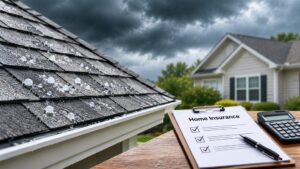
Homeowners insurance usually covers sudden roof damage from events like wind, hail, and falling trees, depending on your policy. It generally doesn’t cover normal wear and tear, aging, or poor maintenance. Flood and rising water damage require a separate flood policy, and some policies have special deductibles for named storms.
Sudden Storm Damage vs Wear and Tear
Insurance is designed for sudden, accidental damage. A tree falling on your roof during a storm is different from shingles wearing out over 25 years.
If your roof was already in poor condition, an insurer may classify some damage as pre-existing.
Flood Is a Separate Policy
The NC Department of Insurance (NCDOI) reminds homeowners that standard homeowners policies do not cover flood or rising water. Flood coverage is available through the National Flood Insurance Program.
Named Storm and Wind Deductibles
Some policies have a separate deductible for named storms like hurricanes. These can work differently from your regular deductible, so check your policy before storm season starts.
What to Do Right After a Storm
Right after a storm, check for safety hazards first. Then document damage with photos and videos, make temporary repairs to prevent further damage, report the claim to your insurer, and keep receipts for emergency repairs. Avoid climbing on your roof and be cautious of unsolicited contractors knocking on your door.
Stay Safe First
- Watch for downed power lines
- Stay off the roof
- Keep away from areas with sagging ceilings or active leaks
Document the Damage
- Take photos and videos from the ground
- Capture damage inside, like ceiling stains or wet insulation
- Photograph fallen limbs and debris
- Note the date and time of the storm
Make Temporary Repairs to Prevent More Damage
NCDOI advises homeowners to protect their homes from further damage with temporary repairs when the home is exposed to the elements. That might mean tarping the roof or placing buckets under leaks.
Keep receipts. Temporary repairs are often part of the claim.
Step-by-Step: How a Roof Insurance Claim Works in NC
A typical roof insurance claim in North Carolina follows a clear path. Review your policy, report the claim, document damage, get a professional roof inspection, meet the insurance adjuster, review the estimate, choose your contractor, complete repairs, and collect any remaining payments. Staying organized at each step helps the process go smoothly.
- Review your policy. Check coverage, deductibles, and any named storm terms.
- Report the claim. Contact your insurance agent or company promptly.
- Document the damage. Gather photos, videos, and receipts.
- Get a professional roof inspection. A qualified roofer can document damage you can’t safely see.
- Meet the adjuster. Be present and show them all the damage.
- Review the estimate. Make sure all damage is included.
- Choose your contractor. Get more than one estimate if you’d like.
- Complete repairs. Keep all invoices and documentation.
- Collect remaining payments. Some insurers release payments in stages.
Who to Call First: Insurer or Roofer?
NCDOI recommends calling your insurance company first and asking for an adjuster to look at your roof before allowing anyone else up there.
A trusted local roofer can still help you understand what you’re seeing and document the damage. Just avoid letting strangers climb onto your roof.
Understanding Adjusters: Company, Independent, and Public
There are three main types of adjusters in a roof claim. Company adjusters work for your insurance company. Independent adjusters are hired by insurance companies. Public adjusters work for homeowners and are paid by the homeowner. Understanding who each adjuster works for helps you know what to expect.
| Adjuster Type | Who They Work For | Who Pays Them | Key Notes |
|---|---|---|---|
| Company adjuster | Your insurance company | The insurer | You don’t pay them |
| Independent adjuster | Insurance companies (often several) | The insurer | You don’t pay them |
| Public adjuster | You, the homeowner | You | Insurer doesn’t have to accept their estimate |
What to Know About Public Adjusters
According to NCDOI, once you hire a public adjuster, your insurance company will communicate only with them. NCDOI advises reading contracts carefully, never signing under pressure, and not paying anything upfront. During some disasters, there may be limits on what public adjusters can charge.
How to Verify an Adjuster’s License
Adjusters should be able to show proof of their license. If you have doubts, NCDOI says you can call the department at 855-408-1212.
How Claim Payments Work
Roof claim payments are usually based on your policy type, deductible, and the estimated cost of repairs. Actual Cash Value policies pay replacement cost minus depreciation. Replacement Cost Value policies may pay the full cost after repairs are done, often in stages. Your deductible is subtracted from the payment.
| Term | What It Means |
|---|---|
| Deductible | The amount you pay before insurance pays |
| Actual Cash Value (ACV) | Replacement cost minus depreciation for age and wear |
| Replacement Cost Value (RCV) | The cost to replace with similar materials |
| Depreciation | Value lost due to age and wear |
| Recoverable depreciation | Depreciation that may be paid after repairs are completed, under some policies |
| Supplement | An added request when more damage is found later |
Why Your First Check May Be Smaller Than Expected
Many homeowners are surprised by their first check. That’s often because depreciation and the deductible are subtracted first. Under some replacement cost policies, the remaining amount may be paid after repairs are finished.
Partial Payments and Reinspections
NCDOI notes you may receive partial payments as repairs are made. If additional damage is found, you can contact the adjuster and ask for a reinspection.
Your Rights Under North Carolina Law
North Carolina law gives homeowners important protections during roof claims. Residential roof replacement or repair contracts must include a five-business-day cancellation period after an insurance claim denial, and contractors can’t start work or collect payment during that time, except for emergency services. You also have the right to choose your own contractor.
The Five-Business-Day Cancellation Rule After a Claim Denial
Under N.C.G.S. 14-401.13, contracts for residential roof replacement or repair are subject to a five-business-day cancellation period after an insurance claim denial. During that time, the contractor can’t begin work or collect payment, except for emergency services.
This protects you from being stuck paying for a roof your insurance won’t cover.
Door-to-Door Sales Protections
The same law also gives buyers a general right to cancel many off-premises sales within three business days. That matters when someone signs you up at your front door.
Your Right to Choose Your Own Contractor
You can choose the roofer you trust. You don’t have to hire the first company that knocks, and you can get more than one estimate.
Getting Help From the NC Department of Insurance
If you have questions about your claim or an adjuster, NCDOI’s consumer line is 855-408-1212.
How to Avoid Storm-Chaser and Roofing Scams
After storms, scammers often go door to door offering roof inspections or free roofs. NCDOI warns that unsolicited roof inspection offers are a red flag and that some scammers have even created damage where none existed. Work only with licensed and insured contractors, get multiple estimates, and never feel pressured to sign.
Red Flags to Watch For
- Unsolicited offers to climb onto your roof
- Pressure to sign immediately
- Promises that “insurance will pay for everything”
- Requests for large upfront payments
- Out-of-town crews with no local address
- Offers to handle your claim directly with your insurer without your agent’s approval
How to Protect Yourself
NCDOI recommends:
- Working only with licensed and insured contractors
- Getting more than one estimate
- Not letting a contractor work directly with your insurer unless your agent approves
Be cautious of anyone offering to waive or cover your deductible. Your deductible is part of your policy agreement.
What a Trustworthy Roofer Should and Shouldn’t Do During a Claim
A trustworthy roofer helps you understand and document roof damage, provides clear written estimates, and respects your right to work with your insurer and choose your contractor. They won’t pressure you, promise guaranteed approval, offer to waive your deductible, or ask for large payments before work begins.
| A Trustworthy Roofer Will | A Trustworthy Roofer Won’t |
|---|---|
| Inspect and explain damage clearly | Pressure you to sign immediately |
| Document damage with photos | Promise your claim will be approved |
| Provide a clear written estimate | Offer to waive your deductible |
| Answer questions honestly | Demand large upfront payments |
| Respect your contract rights | Negotiate your claim without proper licensing |
| Pull permits when required | Disappear after collecting payment |
Choosing a roofer? Use our 12 questions to ask before hiring a GAF roofing contractor.
Have questions about storm damage on your home? Call (910) 994-0403 or contact our team.
What to Do If Your Claim Is Denied or Underpaid
If your roof claim is denied or underpaid, ask for the reason in writing, review your policy, gather additional evidence, and request a reinspection. If you still disagree, your policy may offer an appraisal process, and NCDOI can answer questions. Some declared disasters have also included state mediation programs.
- Ask for the reason in writing. Understand exactly why the claim was denied or reduced.
- Review your policy. Compare the decision to your coverage.
- Gather more evidence. Photos, inspection reports, and repair estimates can help.
- Request a reinspection. Ask the adjuster to look again.
- Ask about appraisal. Many policies include an appraisal process for disputes over the amount of loss.
- Contact NCDOI. The department can answer questions about the claims process.
Remember the Cancellation Rule
If you signed a roofing contract and your claim is denied, the five-business-day cancellation period gives you time to decide your next step without being locked into the contract.
Dealing With Storm Damage Right Now?
Storms don’t wait for a convenient time. Neither should your roof repairs.
Oak Tree Roofing helps homeowners across the Sandhills with storm damage roof repair in Fayetteville, roofing in Hope Mills, and roofing in Raeford. Call (910) 994-0403 to schedule an inspection.
Frequently Asked Questions About Roof Insurance Claims in NC
Does homeowners insurance cover roof replacement in North Carolina?
It can, if the damage was caused by a covered event, like wind, hail, or a falling tree, and depending on your policy. Insurance generally doesn’t cover damage from age, wear and tear, or poor maintenance. Review your policy and contact your insurer for details.
Should I call my insurance company or a roofer first?
NCDOI recommends calling your insurance company first and asking for an adjuster to inspect the roof before letting anyone else climb up. A trusted local roofer can also help you understand and document damage. Avoid letting unsolicited contractors onto your roof.
How long do I have to file a roof insurance claim?
Filing deadlines vary by policy, so check your policy documents or ask your insurer. It’s best to report damage as soon as possible after a storm. Prompt reporting helps with documentation and can prevent additional damage from being questioned.
What’s the difference between ACV and RCV?
Actual Cash Value pays the cost to replace your roof minus depreciation for age and wear. Replacement Cost Value covers the cost to replace with similar materials, often paid in stages, with some depreciation released after repairs are complete. Your deductible applies to both.
Do I need a public adjuster for my roof claim?
Not always. Many homeowners handle claims directly with their insurer. A public adjuster works for you and charges a fee. NCDOI advises verifying their license, reading contracts carefully, and never paying upfront. Insurers don’t have to accept a public adjuster’s estimate.
Can a roofer waive or pay my deductible?
Be cautious of any roofer who offers to waive or cover your deductible. Your deductible is part of your insurance agreement, and misrepresenting repair costs to an insurer can create serious problems. A trustworthy roofer will provide honest, accurate estimates.
What happens if my roof claim is denied?
Ask for the denial reason in writing, review your policy, gather more evidence, and request a reinspection. Your policy may include an appraisal process. Under NC law, roofing contracts include a five-business-day cancellation period after a claim denial.
Get Through Your Roof Claim With Confidence
Barbara didn’t sign with either crew that knocked.
She called her insurance company first. Then she called a local roofer she trusted, who documented the damage with photos and explained everything in plain language. She was there when the adjuster came. She understood her estimate. And she chose her contractor with confidence.
A few weeks later, her roof was repaired, and the stress of that windy morning felt far away.
Storm damage is stressful. Your roof claim doesn’t have to be.
Oak Tree Roofing serves homeowners across Fayetteville, Hope Mills, Raeford, Lumberton, Spring Lake, Sanford, Southern Pines, Pinehurst, Dunn, Red Springs, Clinton, and Elizabethtown. Explore our roofing services, learn about North Carolina roofing repair and replacement and roof replacement in Fayetteville NC, protect your home with rain gutter services, check our service areas, or learn more about Oak Tree Roofing. Comparing roofers? Read our guide to GAF certified roofing contractors in NC and see whether GAF certification actually matters.
Call (910) 994-0403 or find us on Google Maps. Let’s get your home protected again.