Table of Contents
- What Is the NRCA?
- What Are NRCA Roofing Standards?
- What Is the Building Code for Roofs in North Carolina?
- Where Manufacturer Installation Instructions Fit In
- NRCA vs Building Code vs Manufacturer Instructions
- Why Passing Code Isn’t Always the Same as a Great Roof
- Real-World Examples: Code Minimum vs Best Practice
- How to Tell If Your Roofer Follows Best Practices
- Want a Roof Built to More Than the Minimum?
- Frequently Asked Questions About NRCA Standards and Building Code
- Get a Roof Done Right With Oak Tree Roofing
Jennifer spread three roofing bids across her kitchen table in Hope Mills.
The first said, “Installed the code.”
The second said, “Built to NRCA standards.”
The third said, “Installed per manufacturer specifications.”
The prices were thousands of dollars apart. Each roofer sounded confident. And Jennifer had no idea what any of those phrases actually meant.
Was “code” good enough? Was NRCA better? Did the manufacturer’s instructions even matter?
If you’ve ever compared roofing quotes and felt lost in the jargon, you’re not alone. These terms sound similar, but they mean very different things. And understanding them can help you choose a roof that lasts.
This guide explains NRCA roofing standards and how they differ from building code. You’ll learn who creates each set of rules, who enforces them, how manufacturer instructions fit in, and the questions to ask before you hire a roofer.
Questions about your roof? Call Oak Tree Roofing at (910) 994-0403.
What Is the NRCA?
The NRCA, or National Roofing Contractors Association, is a trade association for the roofing industry. It publishes best-practice guidelines, technical resources, and training programs for roofing professionals. The NRCA is not a government agency, and its guidelines are not laws. Instead, they represent what the industry considers high-quality roofing work.
A Trade Association, Not a Government Agency
The NRCA doesn’t issue permits or inspect homes. It doesn’t pass laws.
Instead, it brings roofing contractors together to share knowledge, develop best practices, and train workers.
Why Roofers and Manufacturers Reference NRCA
Roofers, designers, and manufacturers often point to NRCA resources because they reflect decades of real-world roofing experience. When a roofer says they follow “NRCA standards,” they usually mean they follow these industry best practices.
What Are NRCA Roofing Standards?
NRCA roofing standards are industry best practices, mainly published in The NRCA Roofing Manual. The manual covers design, materials, and installation for different roof systems, including detailed construction drawings. These guidelines go beyond legal minimums to describe how experienced professionals build durable, high-performing roofs.
The NRCA Roofing Manual
The NRCA Roofing Manual is the association’s leading best-practices document. It’s made up of four volumes, with one volume updated each year.
One volume focuses on steep-slope roof systems, which includes the asphalt shingle roofs found on most North Carolina homes.
Construction Details and Recommended Practices
The manual includes hundreds of construction details. These drawings show how to handle tricky areas like valleys, roof edges, walls, and penetrations.
Think of them as a playbook for doing the details right.
NRCA ProCertification for Installers
NRCA also offers ProCertification, a series of assessments that measure a roofer’s expertise in specific types of roof installation. Workers who pass earn a professional credential.
It’s one way skilled installers can show their knowledge.
What Is the Building Code for Roofs in North Carolina?
Building code is the set of legal minimum requirements for construction. In North Carolina, residential roofs follow the NC Residential Code, which is based on the International Residential Code. Chapter 9 covers roof assemblies. Local building departments enforce the code through permits and inspections.
The NC Residential Code and Chapter 9 Roof Assemblies
Chapter 9 sets requirements for roof coverings, underlayment, flashing, and more. It covers different roofing materials, including asphalt shingles, metal, and tile.
For example, the model code allows asphalt shingles only on slopes of 2:12 or greater. It requires double underlayment on slopes from 2:12 up to 4:12.
Who Enforces It: Permits and Local Inspectors
Your city or county building department enforces the code. When a roof replacement requires a permit, an inspector checks whether the work meets code.
The NC Department of Insurance’s Office of State Fire Marshal also publishes code interpretations to help clarify how the rules apply.
Code Is the Legal Minimum
This is the most important point. Building code sets the minimum standard a roof must meet to be legal and safe.
It’s the floor, not the ceiling.
Where Manufacturer Installation Instructions Fit In
Manufacturer installation instructions are the shingle maker’s specific rules for installing their products. Building code requires roof coverings to be installed according to these instructions. They also play a major role in warranty coverage. If a roofer ignores them, the installation may not meet code and warranty claims may be denied.
Why Code Points to the Manufacturer
North Carolina’s residential code requires roof coverings to be applied according to the code chapter and the manufacturer’s installation instructions. In other words, the manufacturer’s instructions become part of what code expects.
That means fastening, underlayment, and accessory requirements set by the manufacturer matter.
How Instructions Tie to Your Warranty
Shingle manufacturers like GAF base their warranties on proper installation. Enhanced warranties often have even stricter requirements, including specific accessories and properly balanced ventilation.
Want to understand how contractor certification affects those warranties? Read our guide to GAF Certified vs Certified Plus vs Master Elite.
NRCA vs Building Code vs Manufacturer Instructions
Building code is the legal minimum enforced by local inspectors. Manufacturer instructions are product-specific requirements that code references and warranties depend on. NRCA guidelines are voluntary industry best practices that help roofers go beyond the minimum. A high-quality roof follows code, follows the manufacturer, and applies best practices.
| Factor | Building Code | Manufacturer Instructions | NRCA Best Practices |
|---|---|---|---|
| Who creates it | Code bodies and the state | Shingle and product makers | Roofing industry association |
| Legally required? | Yes | Yes, through code | No, voluntary |
| Who checks it | Local building inspectors | Manufacturer, during warranty claims | Contractor’s own standards |
| Main purpose | Safety and minimum performance | Product performance and warranty | Long-term quality and durability |
| If ignored | Failed inspection, legal issues | Warranty problems, possible code issues | Shorter roof life, more problems |
Think of It Like Three Layers
- Building code keeps your roof legal and safe.
- Manufacturer instructions keep your products performing and your warranty valid.
- NRCA best practices help your roof go further and last longer.
Why Passing Code Isn’t Always the Same as a Great Roof
A roof can pass inspection and still have workmanship issues. Inspectors check key code requirements, but they can’t see every nail, seam, or flashing detail on every roof. Code also sets minimums, not best practices. A great roofer goes beyond what inspectors check to build a roof that lasts.
Inspectors Check Minimums, Not Craftsmanship
Inspectors play an important role. But they focus on whether the roof meets code requirements, not whether every detail reflects top craftsmanship. To see what a thorough final check looks like, read our guide to the GAF post-installation roof inspection.
The Details Inspectors May Never See
Once shingles are installed, many important details are hidden:
- Nail placement under each shingle
- Underlayment overlaps
- Flashing behind walls and chimneys
- Valley construction
That’s why choosing a roofer who cares about best practices matters so much.
Real-World Examples: Code Minimum vs Best Practice
The difference between code minimum and best practice often shows up in small details, like how flashing is installed, how valleys are built, how shingles are fastened, and whether ventilation is balanced. These details may seem minor, but they often decide whether a roof leaks after the first big storm.
| Roof Element | Code Minimum | Best Practice Approach |
|---|---|---|
| Fastening | At least the manufacturer’s required nails | Precise nail placement and extra care in high-wind areas |
| Low-slope underlayment | Double underlayment from 2:12 to 4:12 | Careful overlaps and attention at transitions |
| Wall and chimney flashing | Flashing required at intersections | Detailed step flashing, counter flashing, and kick-out diversion |
| Valleys | Valley lining per code and manufacturer | Carefully built valleys with added leak protection |
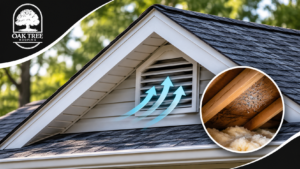
| Ventilation | Minimum ventilation ratios | Balanced intake and exhaust designed for the attic |
| Roof edges | Edge requirements per code | Clean, secure edges that resist wind uplift |
Ventilation is one of the most overlooked rows in that table. See how it works in our guide to roof ventilation and your shingle warranty.
Why the Small Details Matter in Sandhills Storms
Summer thunderstorms and tropical storms can bring heavy rain and strong wind across Fayetteville, Raeford, and the Sandhills. Weak details are usually where leaks start.
That’s why storm damage often shows up first at flashing, edges, and valleys. If storms have already hit your roof, our storm damage roof repair in Fayetteville team can help.
Want help comparing roof bids? Call (910) 994-0403 or contact our team.
How to Tell If Your Roofer Follows Best Practices
To tell if your roofer follows best practices, ask about permits, code compliance, manufacturer requirements, warranty registration, flashing methods, ventilation planning, crew training, and how they inspect their own work. Clear, specific answers signal a contractor who builds beyond the minimum instead of just passing inspection.
Questions About Code and Permits
- Will you pull the required permit?
- How do you make sure the roof meets local code?
Questions About Manufacturer Requirements and Warranties
- Will you follow the manufacturer’s installation instructions exactly?
- Which warranty will I receive, and will you register it?
- Which accessories are required for that warranty?
Questions About Workmanship and Training
- How do you handle flashing at walls and chimneys?
- How will you plan attic ventilation?
- How are your installers trained?
- Do you inspect your own work before the final inspection?
For a complete list, use our 12 questions to ask before hiring a GAF roofing contractor in NC.
Want a Roof Built to More Than the Minimum?
Your roof protects everything under it. It deserves more than the bare minimum.
Oak Tree Roofing helps homeowners across the Sandhills with roof replacement in Fayetteville NC, roofing in Hope Mills, and roofing in Raeford. Call (910) 994-0403 to talk about your project.
Frequently Asked Questions About NRCA Standards and Building Code
Is NRCA a building code?
No. The NRCA is a roofing industry trade association. It publishes best-practice guidelines, including The NRCA Roofing Manual, but these are voluntary. Building code is a legal requirement enforced by local building departments through permits and inspections.
Does my roofer have to follow NRCA guidelines?
No, NRCA guidelines are not legally required. However, many quality roofers use them as a best-practice reference because they reflect decades of industry experience. Your roofer must follow building code and the manufacturer’s installation instructions, which code requires.
What building code applies to roofs in North Carolina?
Residential roofs in North Carolina follow the NC Residential Code, which is based on the International Residential Code. Chapter 9 covers roof assemblies, including roof coverings, underlayment, and flashing. Local building departments enforce these requirements through permits and inspections.
Can a roof pass inspection and still be poorly installed?
Yes. Inspectors check key code requirements, but many details, like nail placement, underlayment overlaps, and flashing behind walls, may be hidden once shingles are installed. Code sets minimum standards. A quality roofer goes beyond the minimum to build a roof that lasts.
Why do roofers follow manufacturer installation instructions?
Building code requires roof coverings to be installed according to the manufacturer’s instructions. These instructions also affect warranty coverage. Skipping them can create code problems and give the manufacturer grounds to deny a warranty claim if something goes wrong.
What is NRCA ProCertification?
NRCA ProCertification is a program of assessments that measure a roofer’s expertise in installing specific roof systems. Workers who pass earn a professional credential. It’s one way installers can demonstrate skill and knowledge of industry best practices.
Get a Roof Done Right With Oak Tree Roofing
Jennifer finally understood her three bids. “Installed to code” meant the minimum. “Manufacturer specifications” meant the warranty would hold. And “NRCA standards” meant extra attention to the details nobody sees.
She chose the roofer who explained all three clearly and showed her how they handled flashing, valleys, and ventilation.
That’s the kind of roofer every homeowner deserves.
Oak Tree Roofing serves homeowners across Fayetteville, Hope Mills, Raeford, Lumberton, Spring Lake, Sanford, Southern Pines, Pinehurst, Dunn, Red Springs, Clinton, and Elizabethtown. Explore our roofing services, learn about North Carolina roofing repair and replacement, keep water flowing with our rain gutter services, check our service areas, or learn more about Oak Tree Roofing. Curious whether certifications really matter? Read does GAF certification actually matter.
Call (910) 994-0403 or find us on Google Maps. Let’s build a roof that goes beyond the minimum.